New weather stations record alpine environmental data
- 10.12.2025
- Research

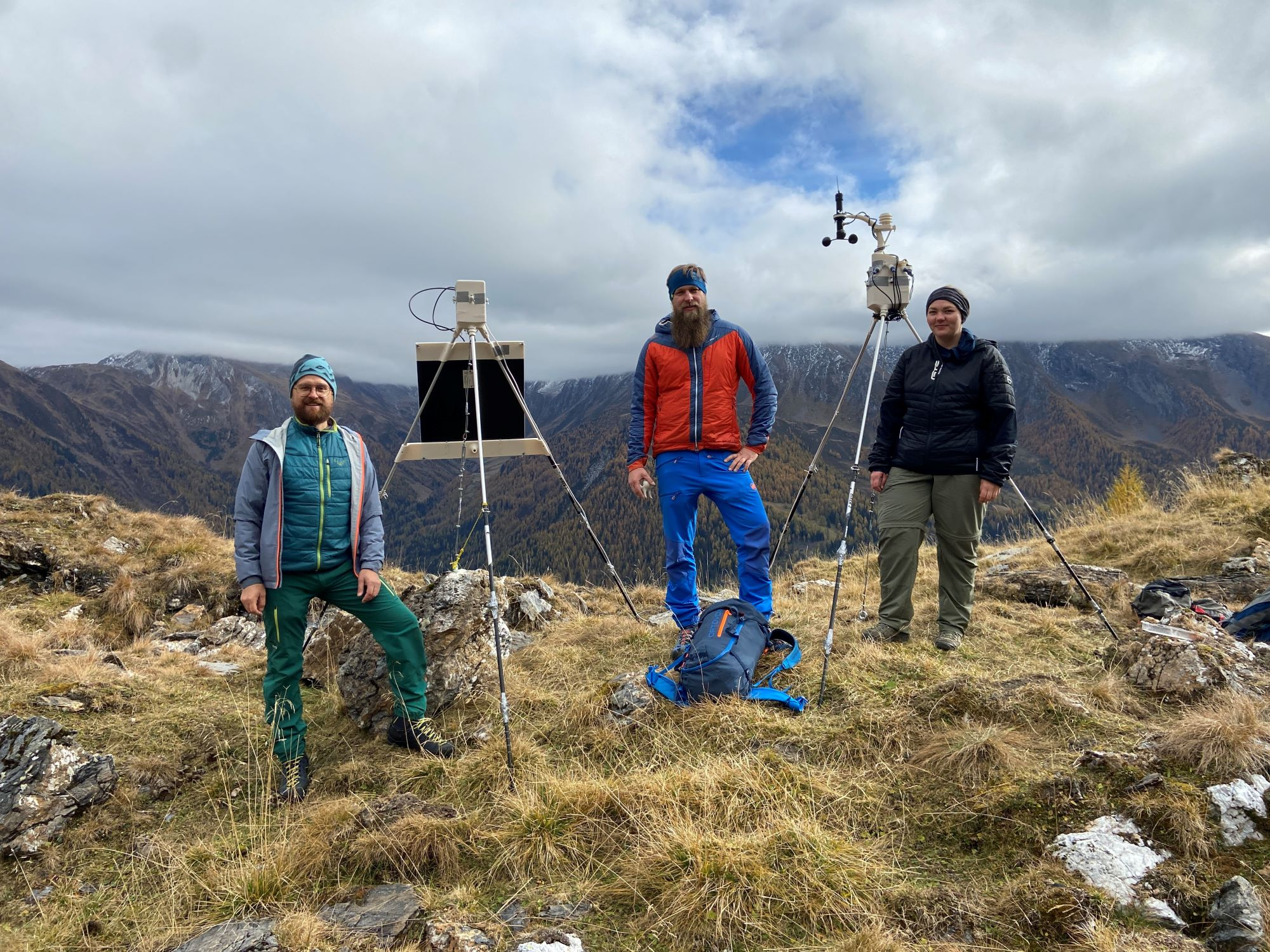
Thomas Schmiedinger, Bernhard Mandl and Bernarda Keßler after successful installation at Reißenschuh.
The Alpine IoT working group at the University of Applied Sciences Kufstein Tirol is strengthening its research into the interaction between nature and technology with new measuring stations in the Alpine region that collect weather and energy data in real time and make it available for evaluation in future projects.
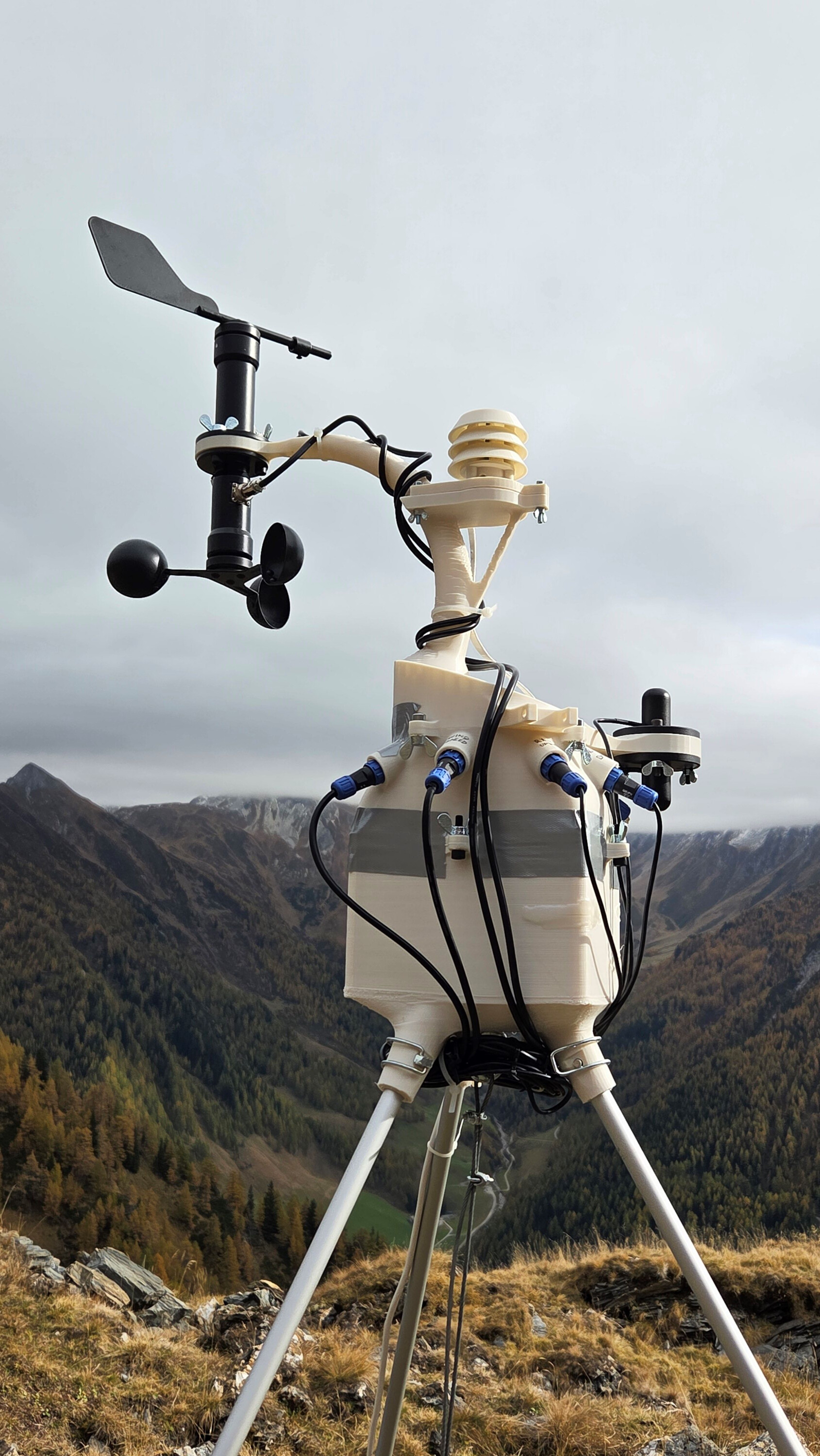
As part of a field project, the Alpine IoT working group at the University of Applied Sciences Kufstein Tirol installed the new Sisu weather station and the Vire energy station on Mount Reißenschuh in the Schmirntal valley. The aim of the project is to collect and evaluate meteorological and energy data in the Alpine region in order to gain insights for further projects in the fields of geology, meteorology, and digital technologies in the Alpine region.
TEST OPERATION UNDER ALPINE CONDITIONS
The stations also serve as a test environment for the Intelligent Ski Slope research project, for which meteorological measurement data is collected and evaluated at specific points along ski slopes. This allows for a better understanding of local weather conditions and enables technical systems to be adapted to the specific challenges of alpine terrain.
The two stations continuously record air temperature, relative humidity, air pressure, wind direction, wind speed, and global radiation. An expansion with soil moisture and snow depth sensors is already planned. The location at around 2,000 meters above sea level offers ideal conditions for testing the systems in alpine regions and validating them under real environmental conditions.
This is a great testing ground for us. At the same time, we are far away from the laboratory here, which means we have to work conscientiously.
Bernhard Mandl, MSc
Research Fellow
A special feature is data transmission via LTE-M, which transmits all measurement data to a cloud in real time. This allows immediate access to the current values - a decisive advantage for research projects that rely on continuous and local data collection.
Challenges in high alpine environments
“You feel very tiny when you’re out and about in this landscape. These are different challenges for technical systems than those found in an urban environment, for example,” says Prof. (FH) Dipl.-Ing. Thomas Schmiedinger, PhD, describing the work in the high alpine environment. Between rugged rocks and changing weather conditions, the team tests the resilience of the components they have developed themselves and gains valuable practical experience. Bernhard Mandl, MSc, also emphasizes the importance of the project for research and teaching: “This is a great test area for us to gain direct experience. And at the same time, we are far away from the laboratory here - which means we have to work conscientiously.”

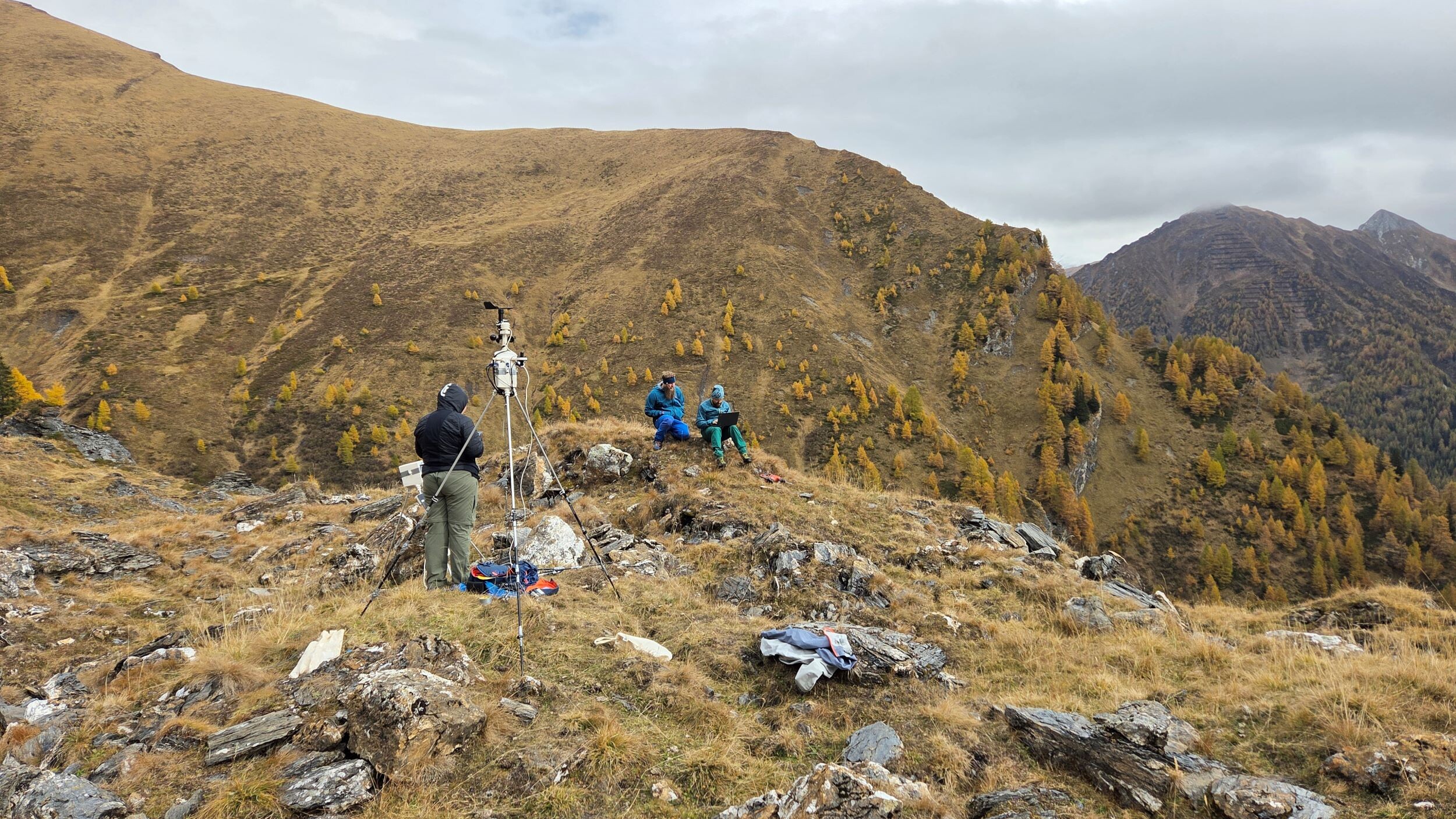
The Alpine IoT working group team installing the stations in alpine terrain.
INTERACTION BETWEEN NATURE AND TECHNOLOGY
The installation was carried out by Bernarda Keßler, BSc, Bernhard Mandl, MSc, and Prof. (FH) Dipl.-Ing. Thomas Schmiedinger, PhD, from the University of Applied Sciences Kufstein Tirol - in cooperation with Thomas Zieher, PhD, from the Federal Research Center for Forestry - Department of Torrent Processes & Hydrology.
The name of the weather station, Sisu, comes from Finnish and stands for endurance, while Vire means energy or vitality. Both terms reflect the aim of the project: to highlight the harmonious interaction between nature and technology in the Alpine region.
Links:
- Smart Products & AI-driven Development | ft
- Intelligent Ski Slope | Research Project