Dressed for Animation: A Look Inside the MoCap Lab
- 11.05.2026
- Research

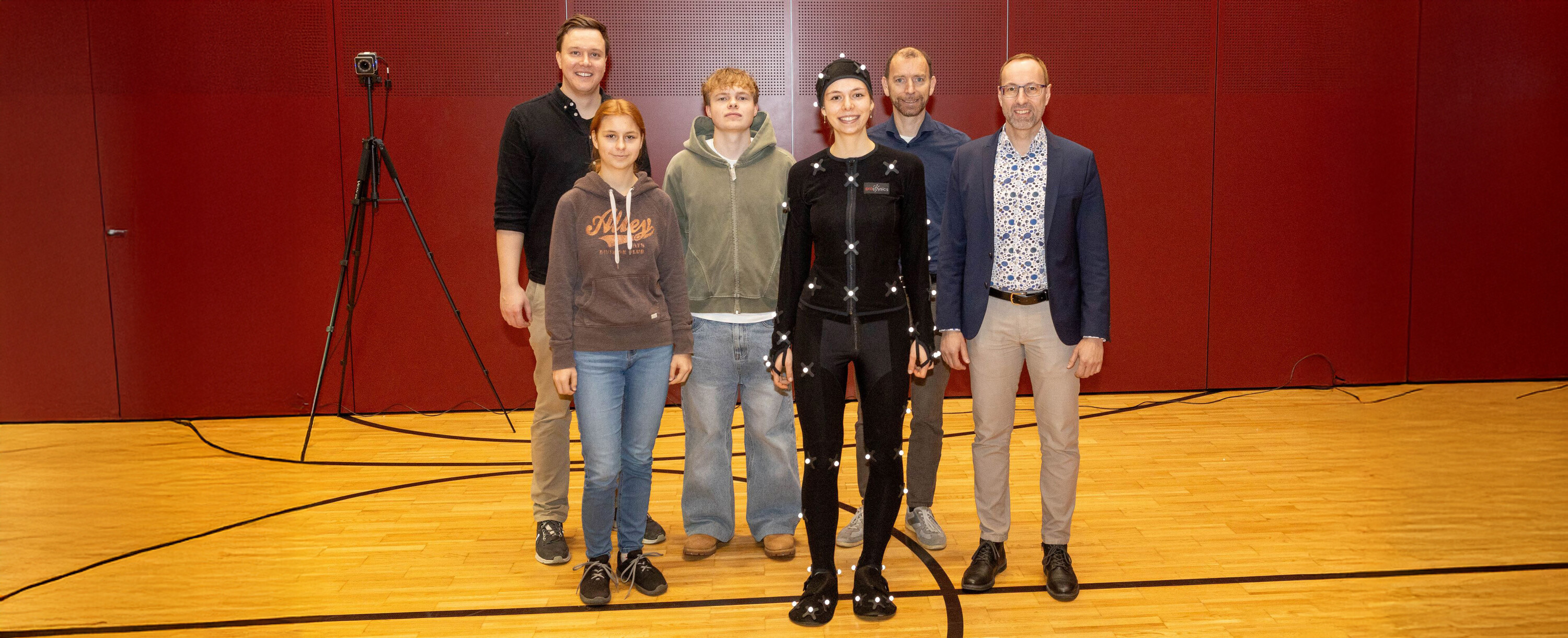
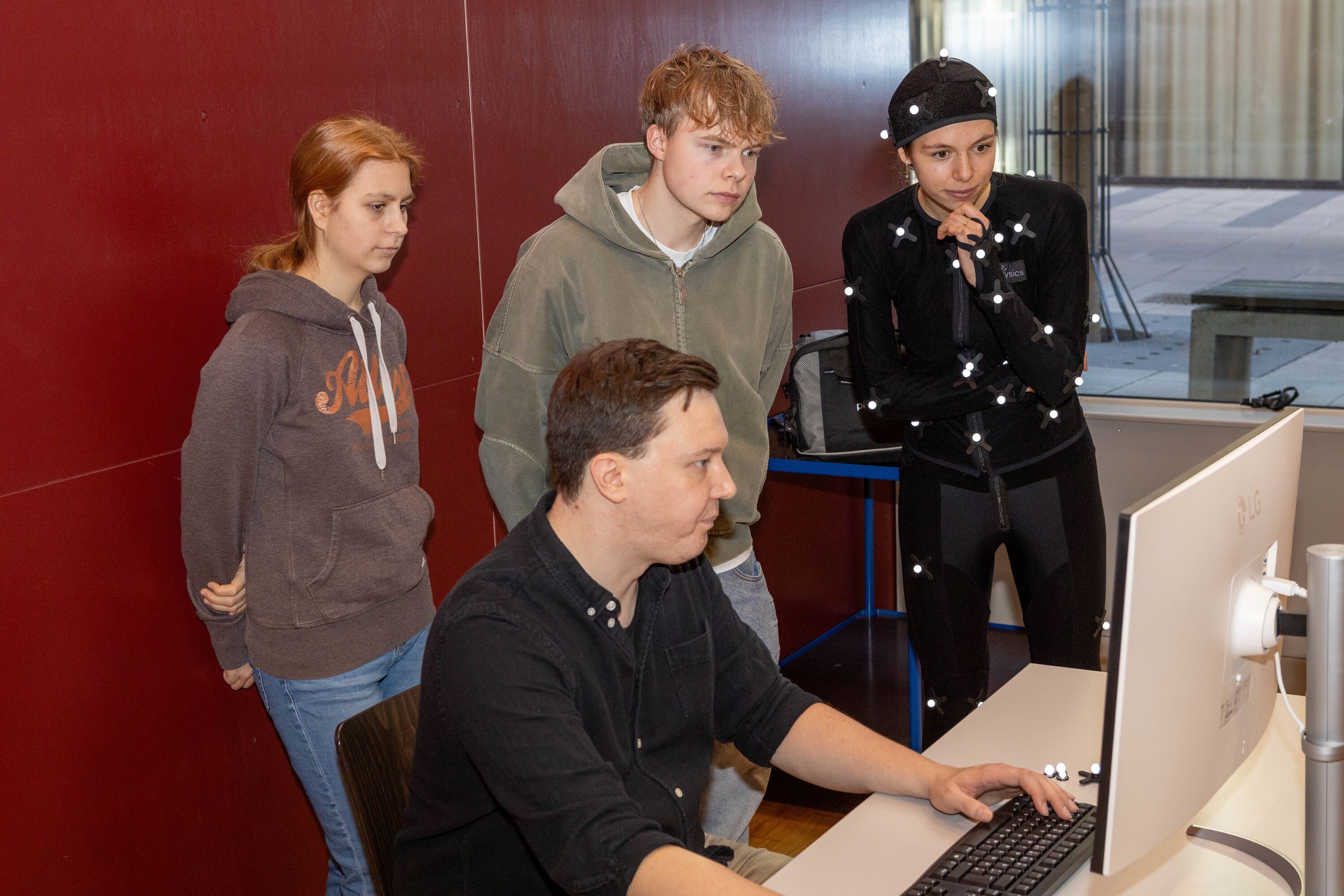
MoCap Lab Director Julian Klinger, MSc; HLW students Sarah Haupt, Matthias Feiersinger, and Stefanie Leps; and the Director of Laboratories at Kufstein University of Applied Sciences, Asc. Prof. (FH) Ing. Markus Ehrlenbach, MSc, and FH Rector Prof. (FH) PD Dr. Mario Döller (from left to right) in the MoCap Lab.
The Motion Capture Lab at Kufstein University of Applied Sciences combines cutting-edge technology with hands-on learning - and students from HLW Kufstein had the chance to try it out for themselves.
How are realistic movements created in movies, video games, and virtual reality applications? At the University of Applied Sciences Kufstein Tirol, this technology isn’t just taught in theory - students can experience it firsthand in the university’s own motion capture lab.
[...] BECAUSE IT IS EXACTLY THE TECHNOLOGY USED BY THE BIGGEST FILM AND GAME PRODUCTIONS—AND WE CAN SHARE THIS KNOWLEDGE DIRECTLY HERe.
Julian Klinger, MSc
Research Assistant in the Data Science & Intelligent Analytics Division
TECHNOLOGY LIKE IN MOVIES AND GAMES
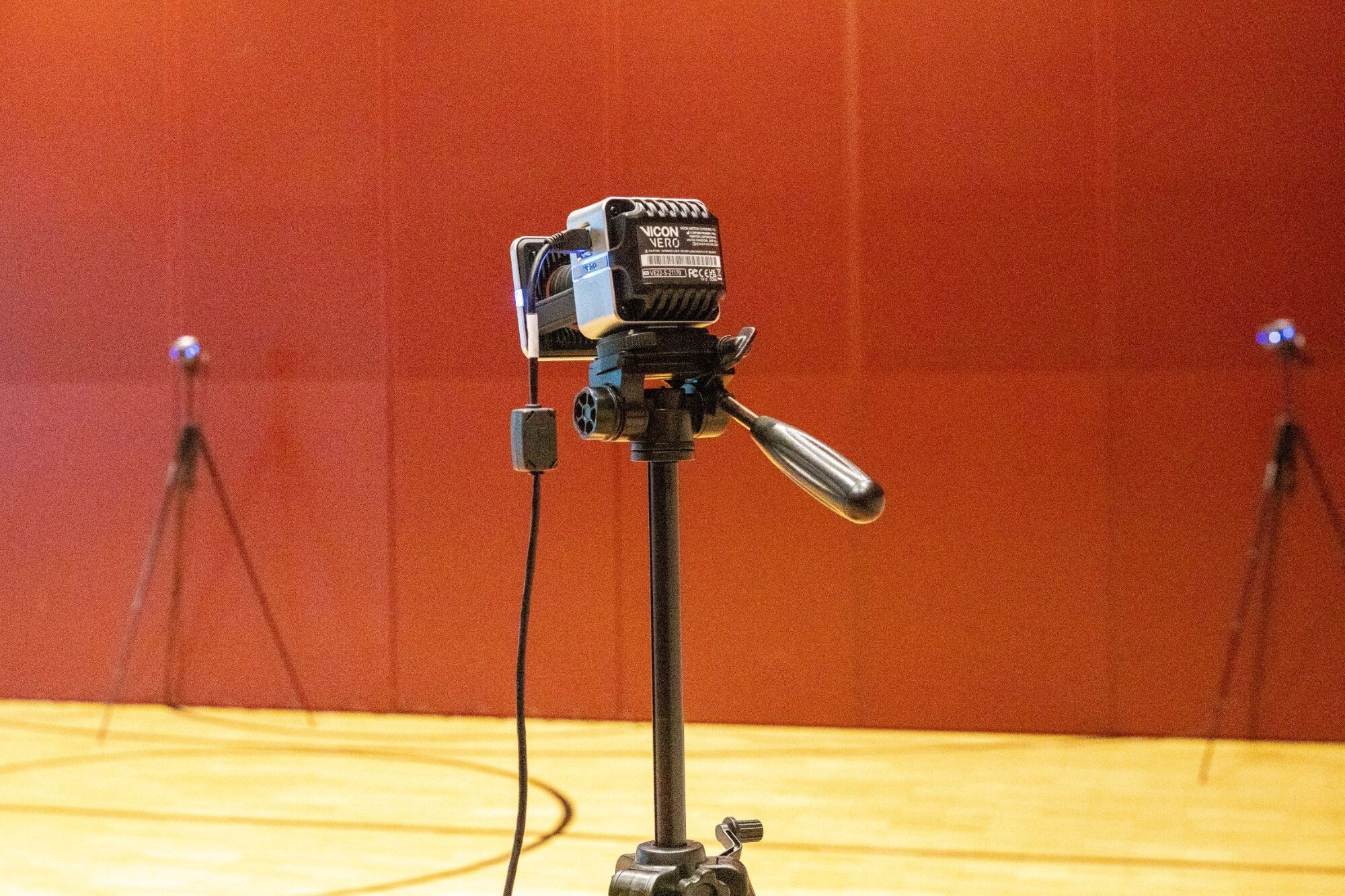
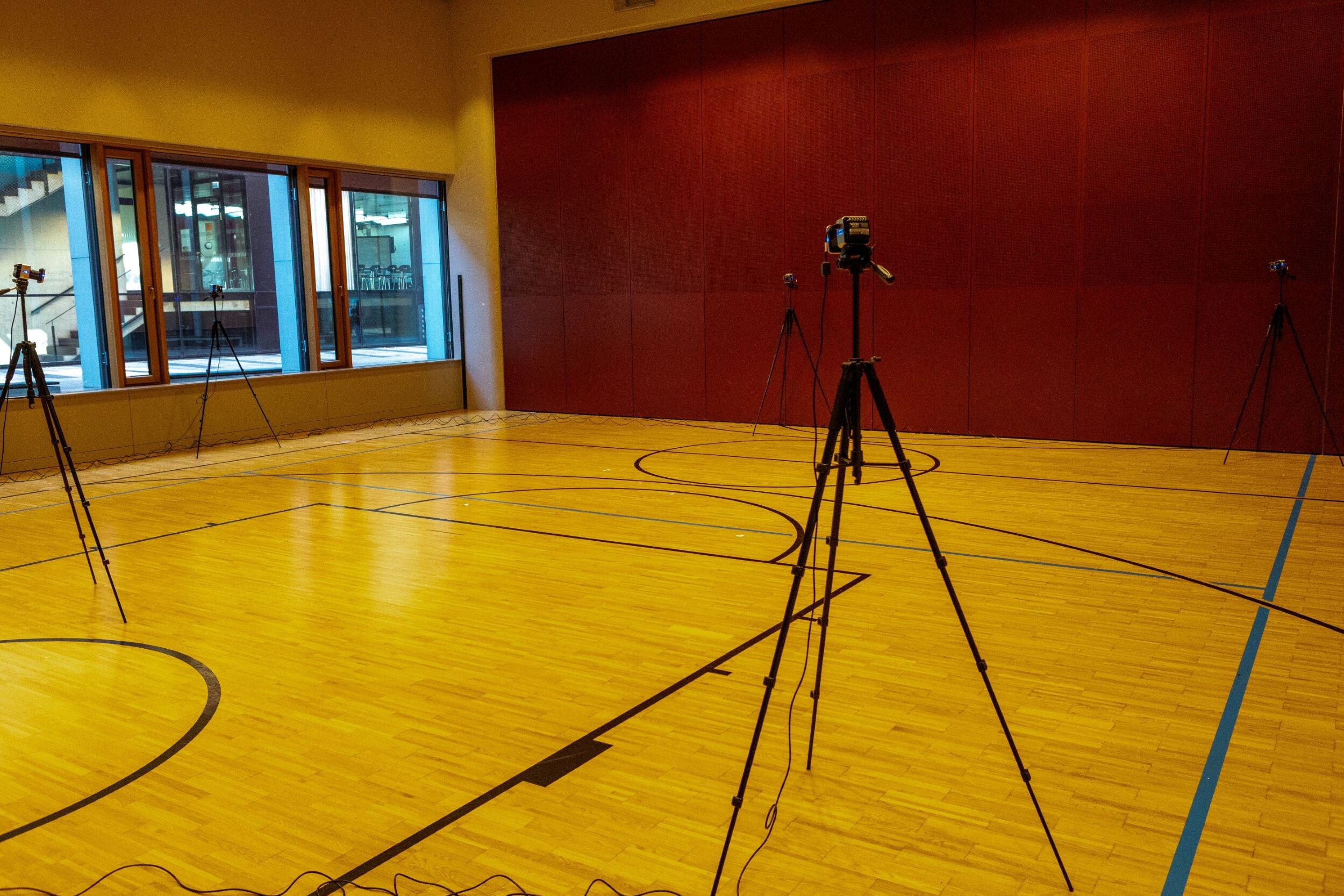
What makes this special is that the setup can be configured flexibly as needed - for example, in the university’s auditorium. It takes about three hours to get the cameras, computers, and software up and running. The system utilizes professional technology similar to that used in the film and gaming industries. The motion capture system features five mobile cameras that can be set up flexibly anywhere and track a person within a tracking area of approximately 2x2 meters.
In addition, six more cameras are permanently installed in the gym, which can be integrated into larger projects. This makes it possible to capture significantly larger areas of movement and to precisely track multiple people at the same time. The captured data is processed using the Vicon system and then utilized in game engines such as Unity or Unreal.
“The MoCap Lab is one of the most impressive offerings the university has to offer,” explains Julian Klinger, MSc, a research assistant in the Data Science & Intelligent Analytics department and the person in charge of the MoCap Lab. “Above all, because it uses the exact same technology that major film and game productions rely on - and we can pass on this knowledge directly here.”

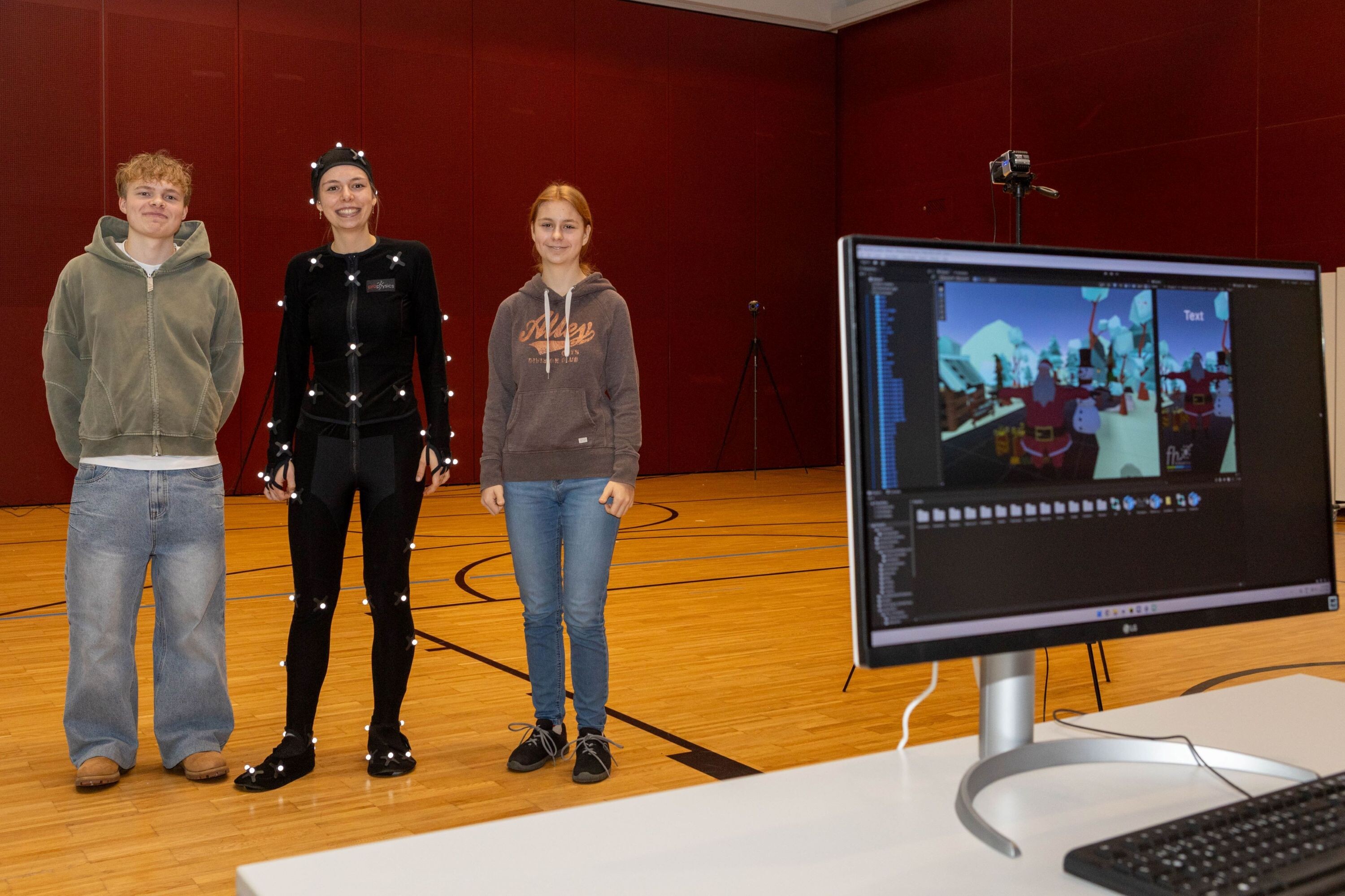
The three students from HLW Kufstein and Julian Klinger, MSc, are watching the live-recorded motion data on the screen together in the motion capture lab at FH Kufstein Tirol, gaining a direct insight into digital animation in real time.
LEARNING BY DOING
The lab is currently being used for both teaching and research projects. Students not only learn the theoretical fundamentals but also work with the technology themselves: they calibrate the system, put on the suits, and conduct their own shoots - much like on a professional set. At the same time, research is being conducted into how motion capture data can be used in extended reality applications and what role artificial intelligence will play in this in the future.
“AI is becoming increasingly important - for example, in data processing or as a complement to animations,” said Klinger. “Nevertheless, it’s already clear that motion capture cannot simply be replaced due to its precision.”
INSIGHTs FOR HLW KUFSTEIN
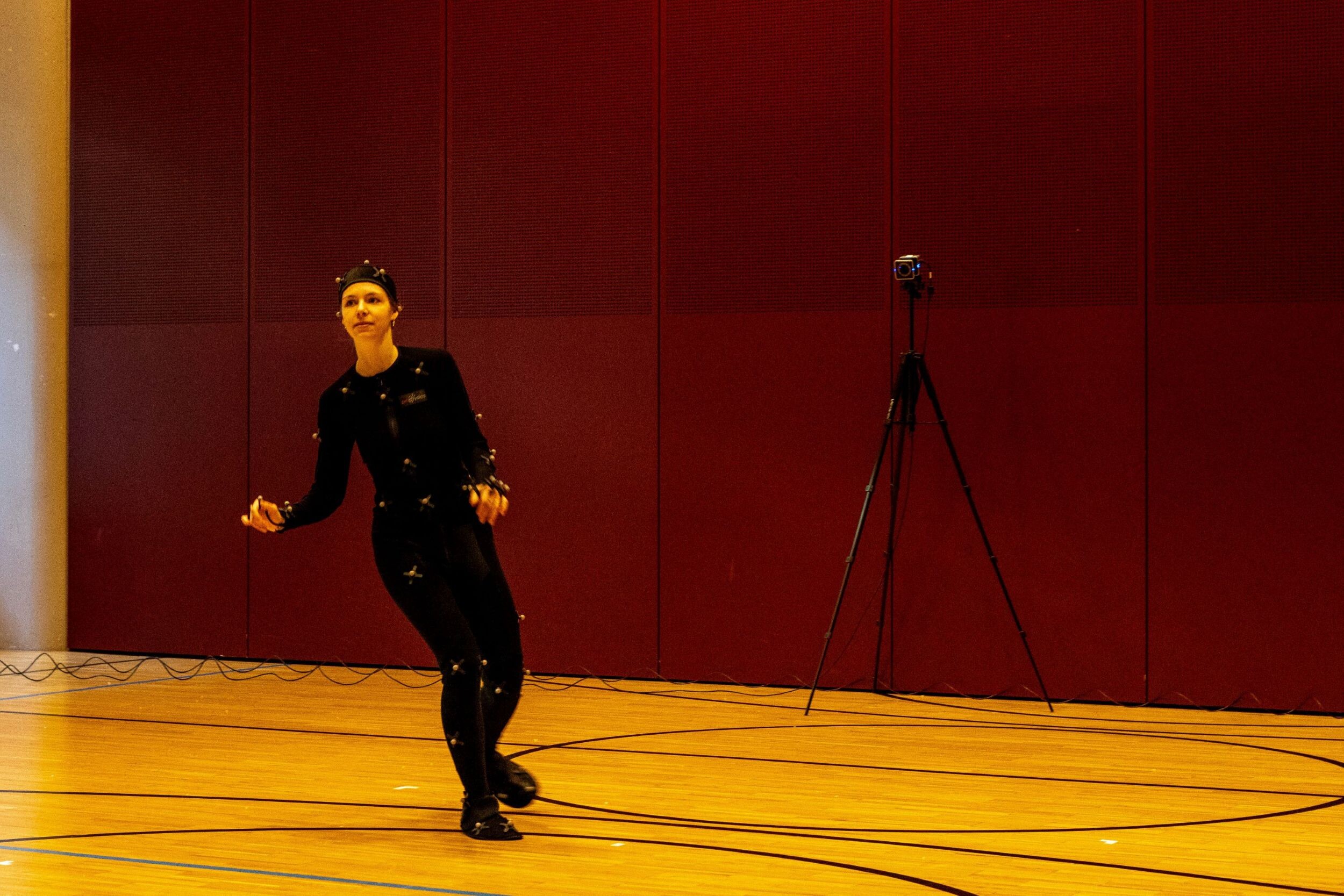
A visit by students from the media design class at HLW Kufstein demonstrated how this works in practice. They had the opportunity to try out the lab themselves and create their own scenes. One student, Stefanie Leps, donned the motion-capture suit, while her classmates directed, planned scenes, and controlled the recording. The movements were digitally captured and transferred into an animated Christmas scene.
“That was an experience I never thought I’d get to have,” Leps says, describing her impressions. Sarah Haupt, who directed the project, also highlights the hands-on approach: “We thought about which poses we wanted to do beforehand, and then I called out what we were going to do.”
I NEVER THOUGHT I'D HAVE THE CHANCE TO HAVE THAT KIND OF EXPERIENCE.
Stefanie Leps
Pupil
Matthias Feiersinger was particularly impressed by how realistic it all felt: “I’d only ever seen motion capture in videos before - it was exciting to see that it works exactly the same way in real life.” In addition to the experience, the pupils also gained technical insights. For example, they were surprised by just how efficiently the technology can be used. “If you’re well prepared, it actually goes pretty quickly,” said Haupt. For Klinger, it’s precisely these moments that matter most: “You realize time and again that we’re creating memories here that will last a long time.”
The Motion Capture Lab thus impressively demonstrates how complex technologies can be made accessible - and what practical, hands-on learning at Kufstein University of Applied Sciences in Tyrol can look like.
The Motion Capture Lab project at the University of Applied Sciences Kufstein Tirol is funded under the Tyrolean Young Researchers Support Program (TNF) of the State of Tyrol.
Links: