Resilient Tourism: Impulses for Tourism 2026
- 28.10.2025
- Research

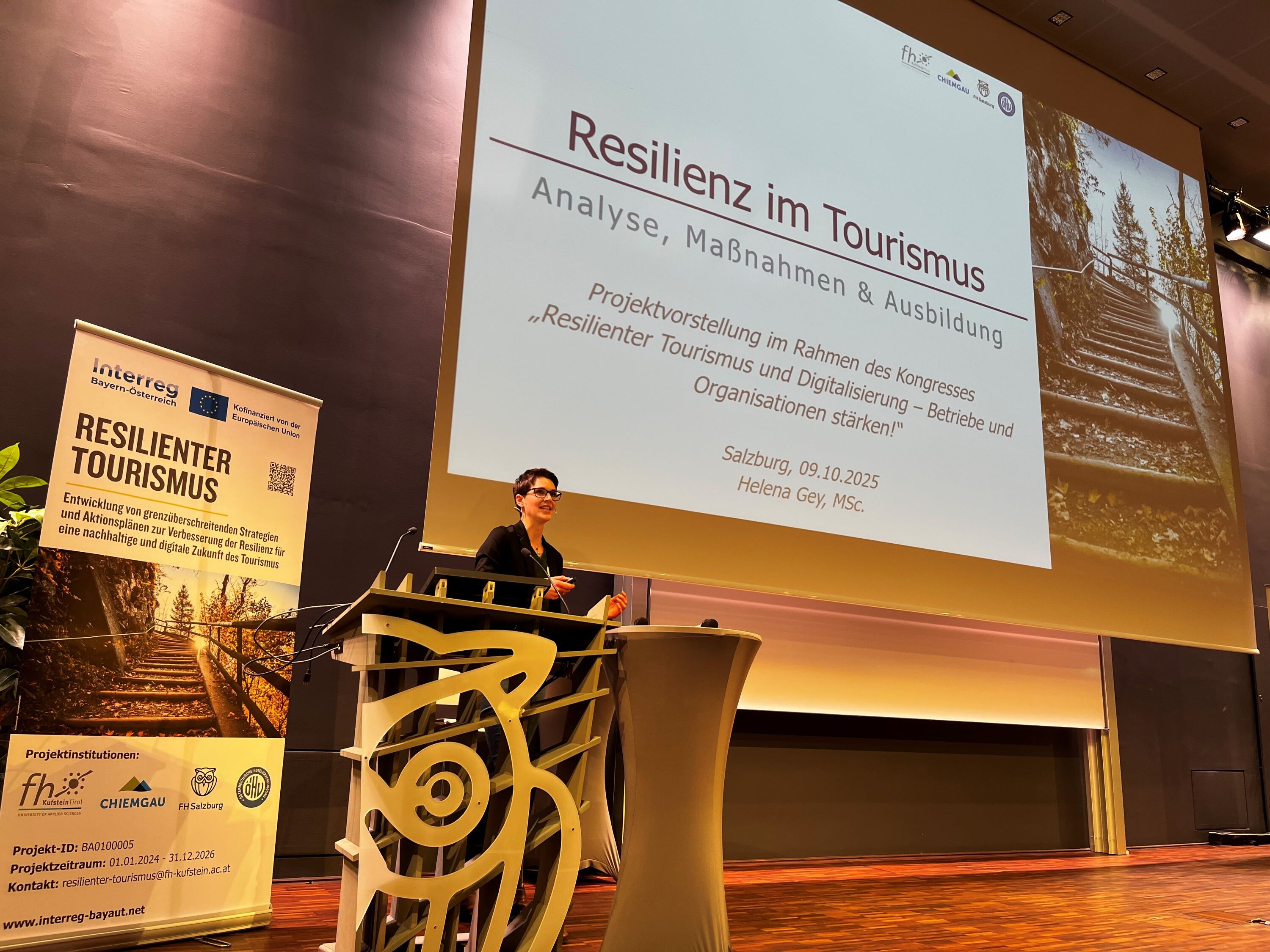
Helena Gey from the University of Applied Sciences Kufstein Tirol presented outcomes from the Resilient Tourism project at the second congress at the University of Applied Sciences Salzburg.
At the beginning of October 2025, the second transnational congress of the Interreg project Resilient Tourism took place at the Salzburg University of Applied Sciences. Inspiring presentations and stimulating discussions opened up new perspectives for the guests – in line with the motto: Strengthening businesses and organizations.
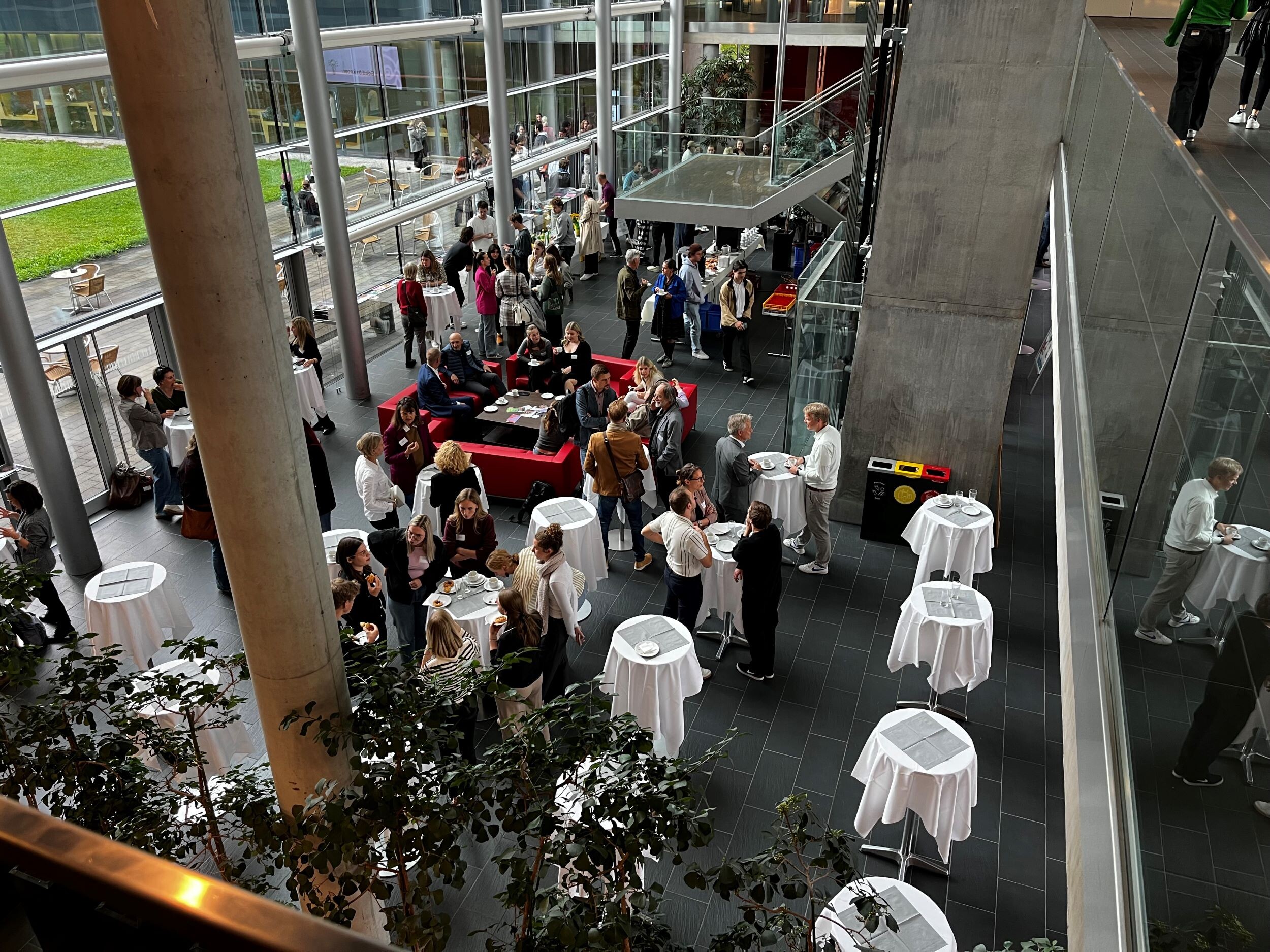
On 9. October 2025, more than 150 tourism professionals, students and interested parties gathered at the University of Applied Sciences Salzburg for the second congress of the Interreg project Resilient Tourism. Under the title Resilient Tourism and Digitalisation – Strengthening Businesses & Organisations!, the event offered a variety of food for thought for the future of the industry with exciting keynotes, impulse presentations and project results.
At the beginning, Helena Gey from the University of Applied Sciences Kufstein Tirol presented the current status of the project and introduced key results, including the newly developed Resilience Index and the certificate course Resilience Manager in Tourism.
Later in the afternoon, the speakers shared their personal experiences and convictions and showed how a positive attitude can help to actively shape transformation in tourism. The focus was on integrating artificial intelligence into resilient structures - as an approach to consciously and sustainably managing transformation processes.
WE HAVE TO BE PREPARED FOR THINGS, EVEN WITHOUT KNOWING WHEN AND WHERE CRISES WILL STRIKE.
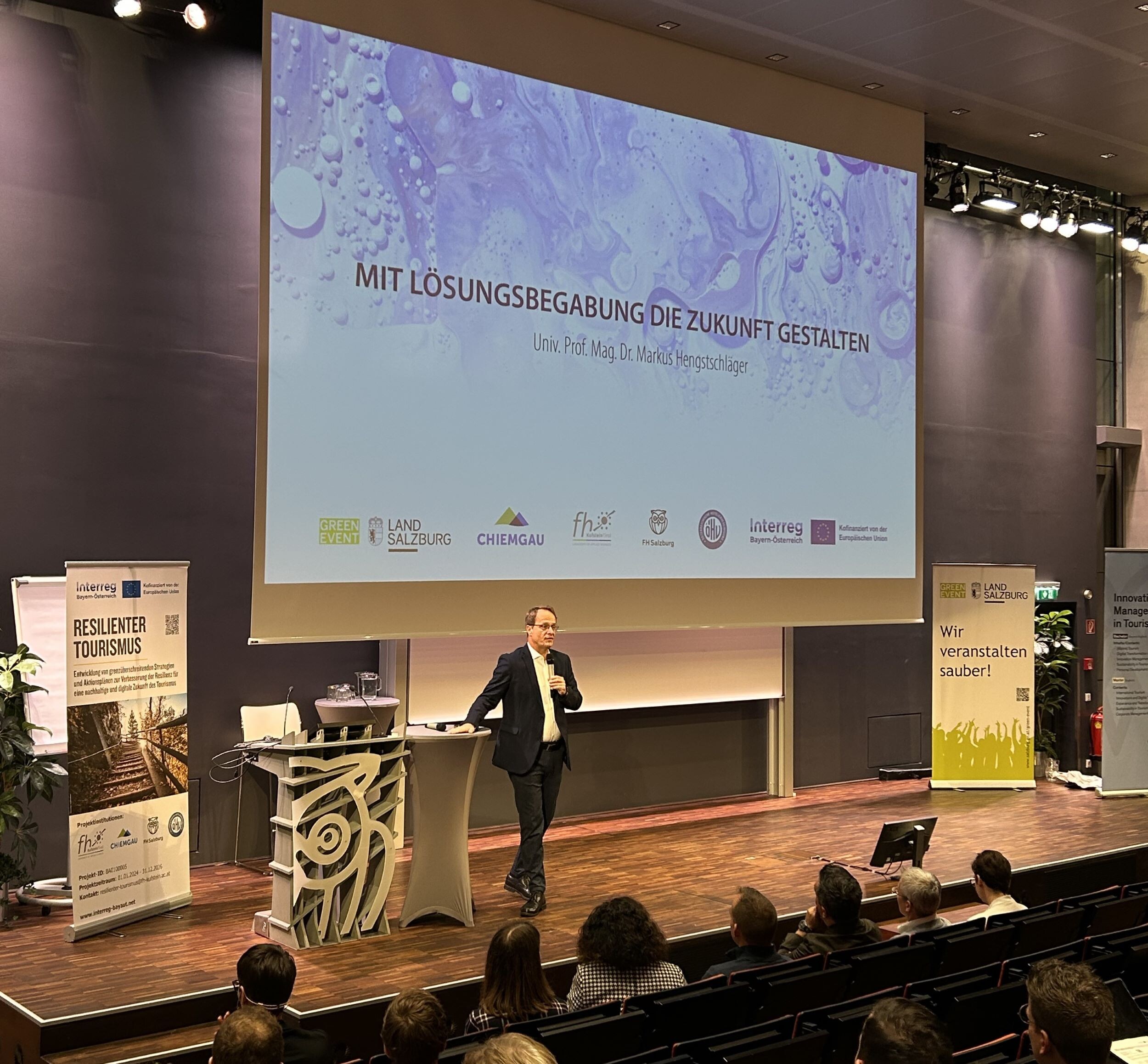
Prof. Markus Hengstschläger
DESIGNING FUTURE WITH A TALENT FOR SOLUTIONS
In his opening keynote speech, renowned geneticist and author Prof. Markus Hengstschläger set the tone for the afternoon's topic with vivid, inspiring language: “We have to be prepared for things, even without knowing when and where crises will come from.” This requires individuality, flexibility, and movement - rather than focusing exclusively on the past.
Hengstschläger expressed confidence that humanity can respond resiliently to future crises if it utilizes one of its greatest potentials: the ability to find solutions. To promote this, he called on the tourism professionals present to develop grand visions instead of settling for small goals—because many discoveries, often accidental, await along the way.
RESILIENT BUSINESS MANAGEMENT
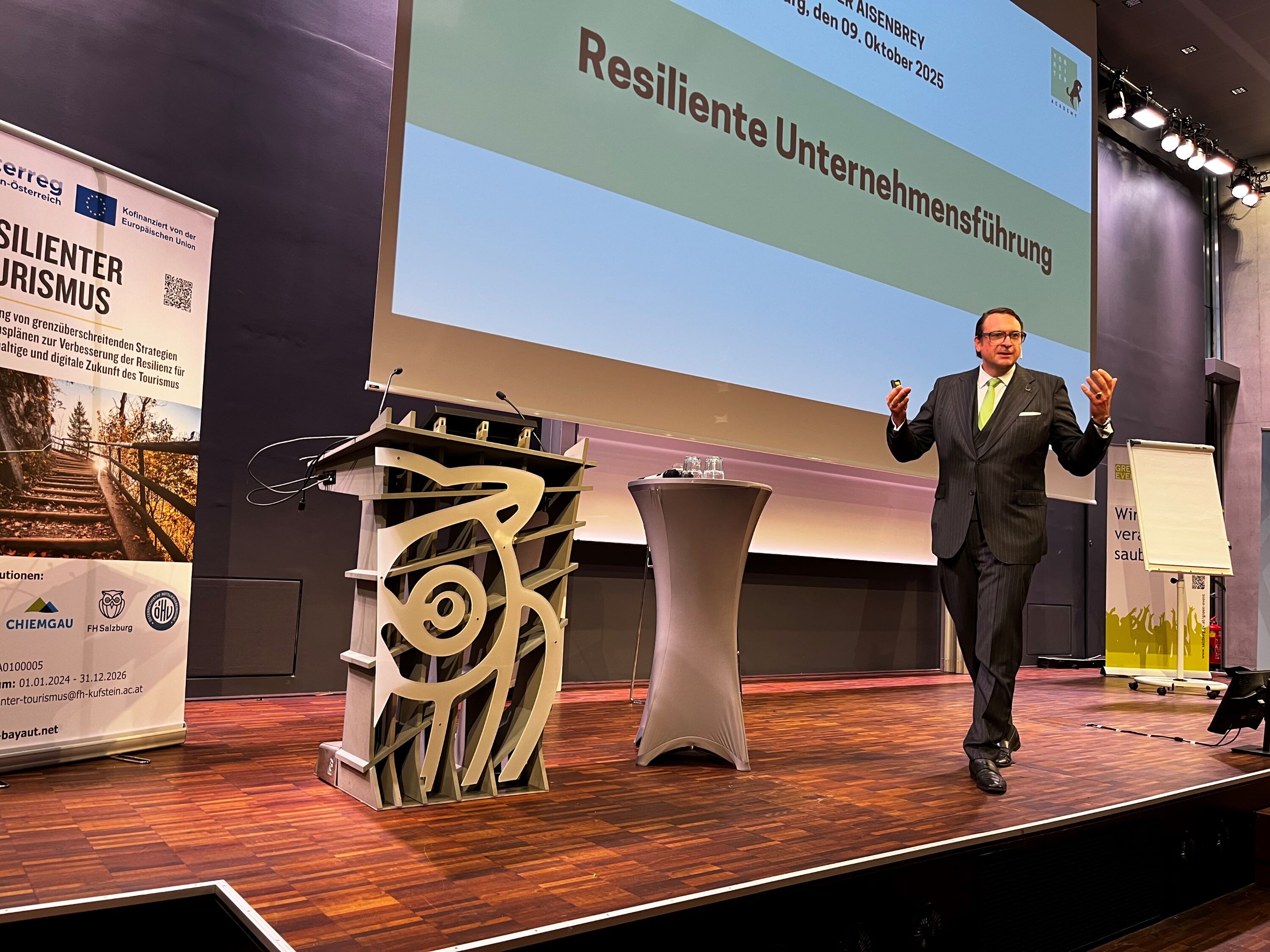
Alexander Aisenbrey, managing director of Vorreiter AG and Hotelier of the Year 2021, provided an impressive example of how resilient corporate management works in practice. In his presentation, he talked about the highs of his career in the hotel business – but also about setbacks that never discouraged him. His central message, based on many years of experience: People must be the focus. According to Aisenbrey, a good manager is ideally a coach who leads with empathy, develops visions, and supports employees in their development.

Alexander Aisenbrey reports from his own experience what resilient corporate management means in the hotel industry.
Thomas Reisenzahn and Marco Riederer from Prodinger Tourism Consulting then turned their attention to the figures. Using clear graphics, they illustrated current developments in the Alpine tourism industry and showed how these are changing hotel investments. What was particularly memorable was that the Alpine accommodation market is becoming increasingly diversified - for example, through new models such as buy-to-let, where vacation apartments are purchased by private individuals and rented out through an operator, or branded residences, i.e., condominiums that are managed under a well-known hotel brand.
ARTIFICIAL INTELLIGENCE IN TOURISM
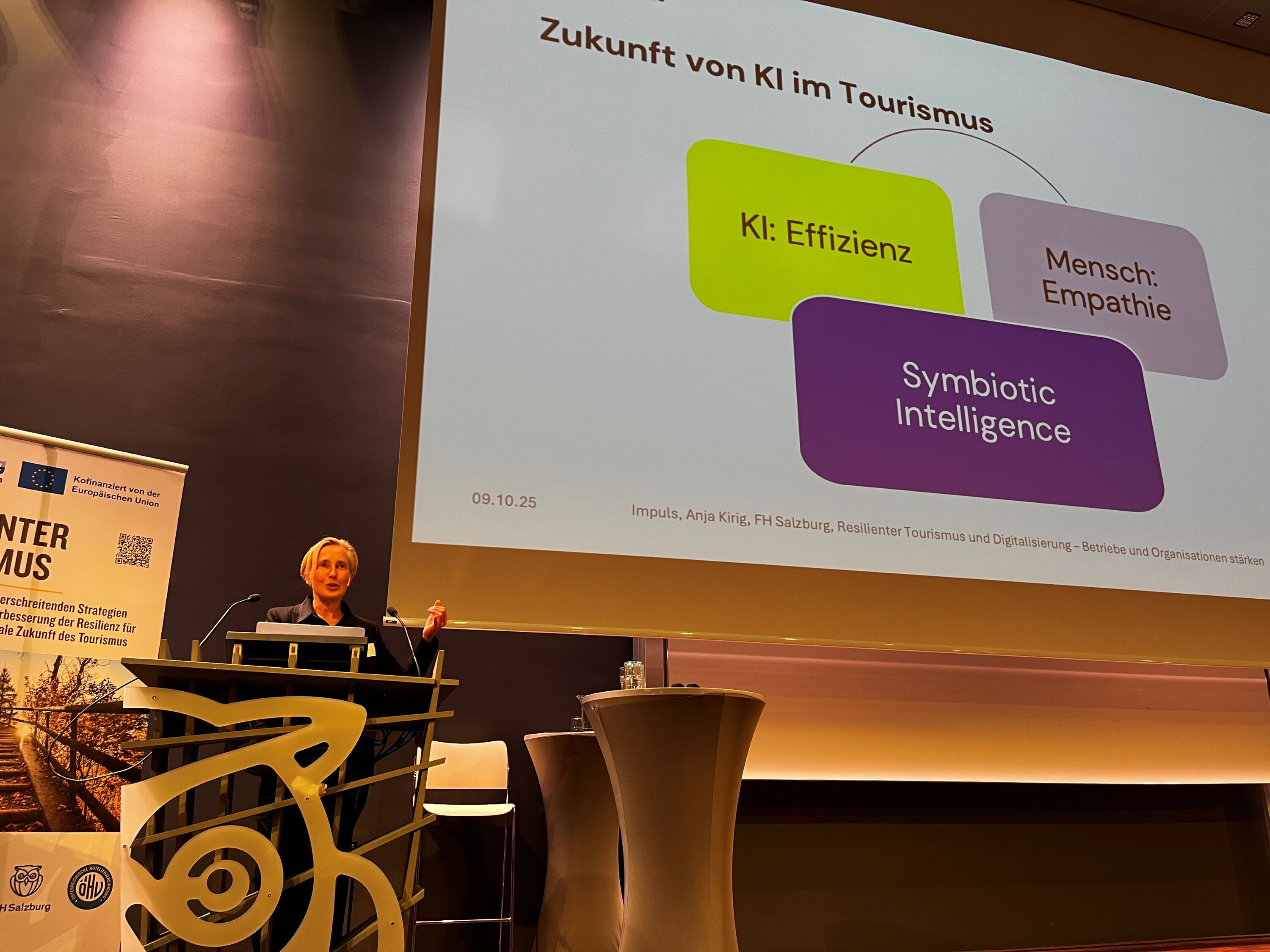
Anja Kirig from the Zukunftsinstitut (Future Institute) bridged the gap to artificial intelligence. She showed how AI can make tourism more sustainable and efficient: “AI accompanies guests, supports teams, and helps organizations to operate more resiliently and act more humanely.”
Specific applications range from personalized guest services and automatic translations to AI-supported market analyses, capacity planning, visitor flow management, and AI-controlled climate and lighting systems. Kirig outlined the future of AI in tourism in six concise theses. Her vision: HumAInity - a symbiotic intelligence that combines AI efficiency and human empathy.
AI GUIDES GUESTS, SUPPORTS TEAMS, AND HELPS ORGANIZATIONS TO OPERATE MORE RESILIENTLY AND ACT MORE HUMANELY.
Anja Kirig
Dr. Marco Maier, co-founder of Munich-based start-up Tawny, then provided insights into the world of AI-based video analysis. The company launched during the coronavirus pandemic with emotion analytics for advertisements and was awarded the German Market Research Innovation Prize in 2022 for this work. This was followed by a pilot project with Deutsche Bahn, in which cameras analyzed the movement routes of passengers. Today, the focus is on Vision AI in the retail and event sectors: in stores, it measures interest in products, and at trade fairs and events, it helps to direct crowds and capture audience reactions in real time. For tourism professionals, this opens up new opportunities to manage visitor flows, better understand guest behavior, and tailor offers more effectively.
NEW IMPULSE ALSO IN 2026
Further formats are planned for the coming year, including three fireside chats on the topic of regional resilience. In small groups, they offer the opportunity for intensive exchange and lively discussions about the next steps in the project.
As a grand finale, the project team invites experts and interested parties to the third Resilient Tourism – Strengthening Regions & Destinations! congress at the Kufstein University of Applied Sciences in Tyrol in fall 2026. Thanks to funding from Interreg Bavaria-Austria, the event is free of charge for all interested parties.
Stay up-to-date: Sign up for our Newsletter (via email) to receive the latest updates on the Resilient Tourism project delivered straight to your inbox.
Links:
- Resilient Tourism | Research Project
- resilienter-tourismus@fh-kufstein.ac.at | Newsletter subscription