Practical research into automation
- 27.10.2025
- Research

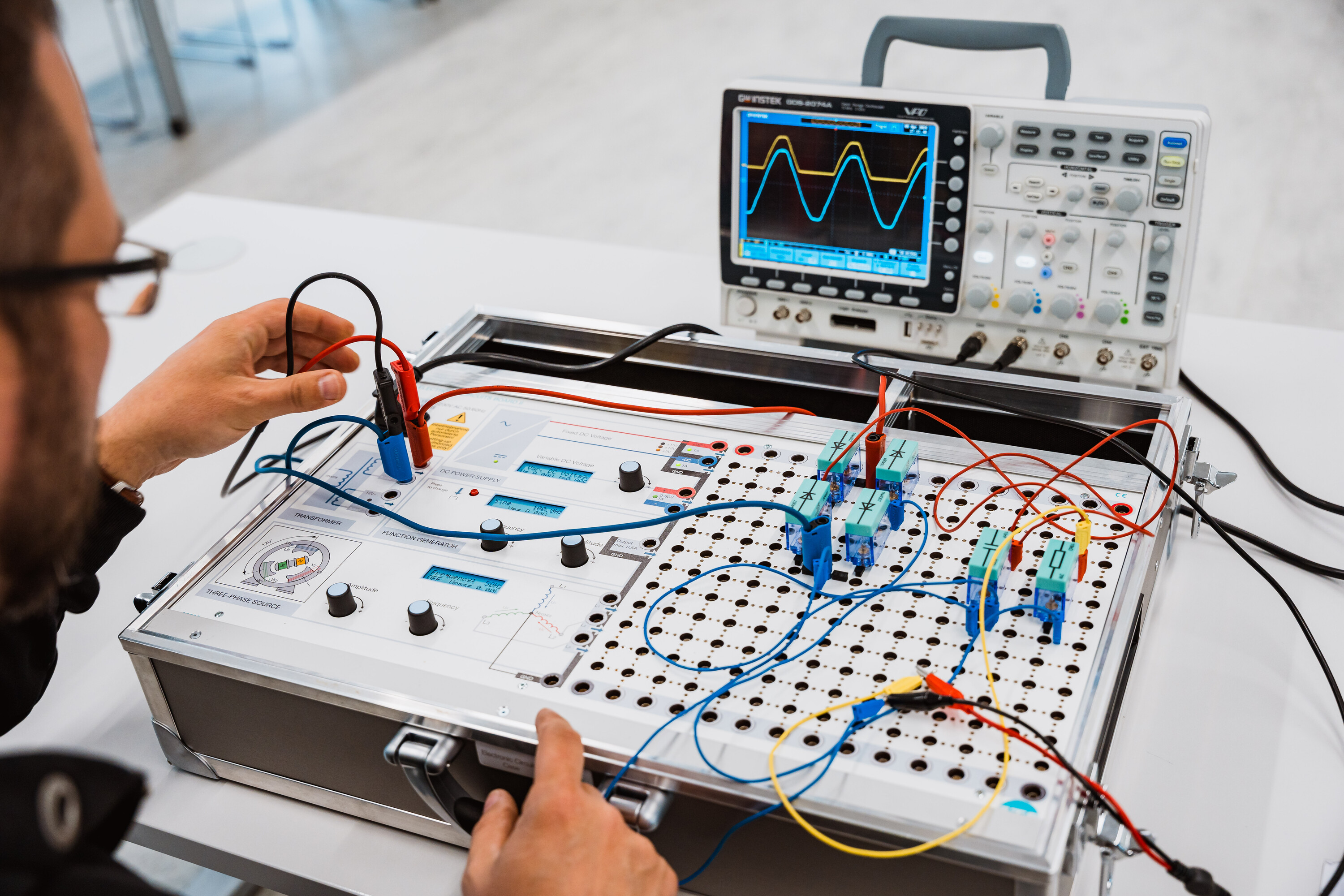
Laboratory manager Markus Ehrlenbach, MSc, demonstrates how an automation system works to students in the Automation Lab at the University of Applied Sciences Kufstein Tirol.
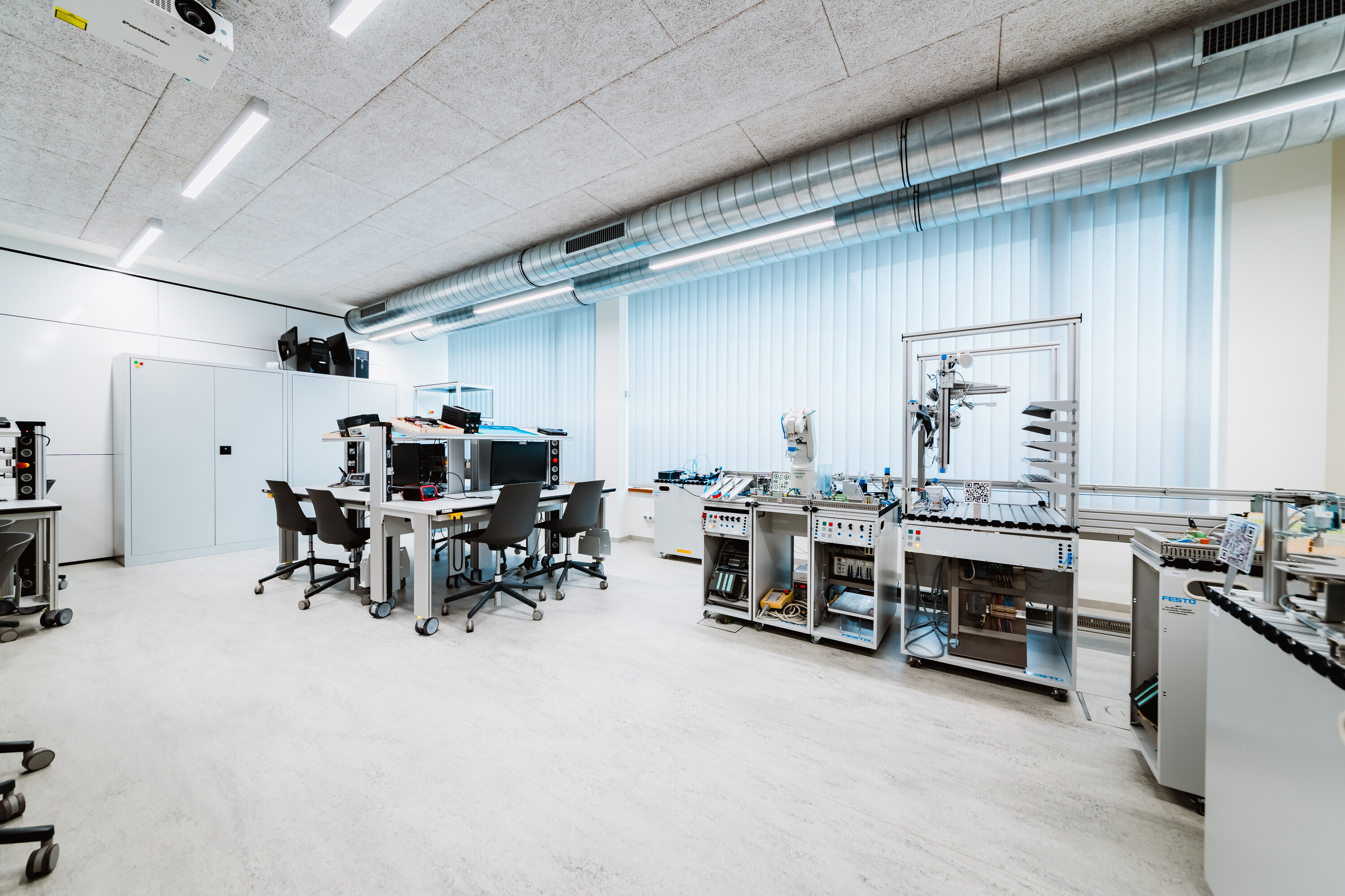
The Automation Lab at the University of Applied Sciences Kufstein Tirol offers students and research partners a technically advanced platform for testing and developing automation and Industry 4.0 applications. This is where theory meets realistic practice.
The Automation Lab forms the backbone of automation-related teaching and research at the University of Applied Sciences Kufstein Tirol. Its goal is to implement theoretically learned concepts such as sensor technology, actuator technology, control engineering, and digitization directly in real systems. Laboratory manager Markus Ehrlenbach, MSc, emphasizes: “The practice-oriented equipment enables students to directly apply their theoretical knowledge and develop their skills in a realistic environment.” The lab thus functions as an interface between the university and industry.
Equipment and technologies
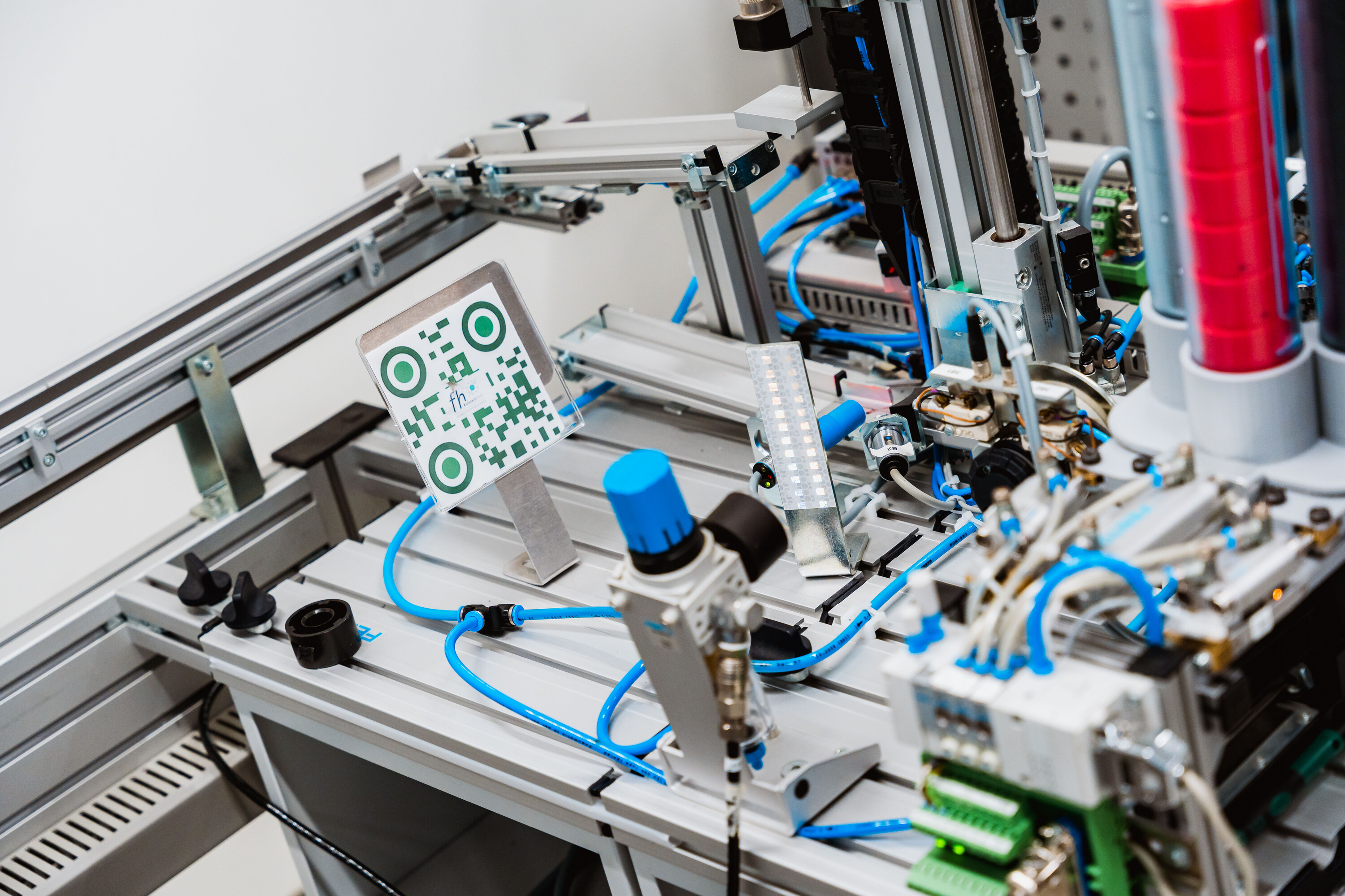
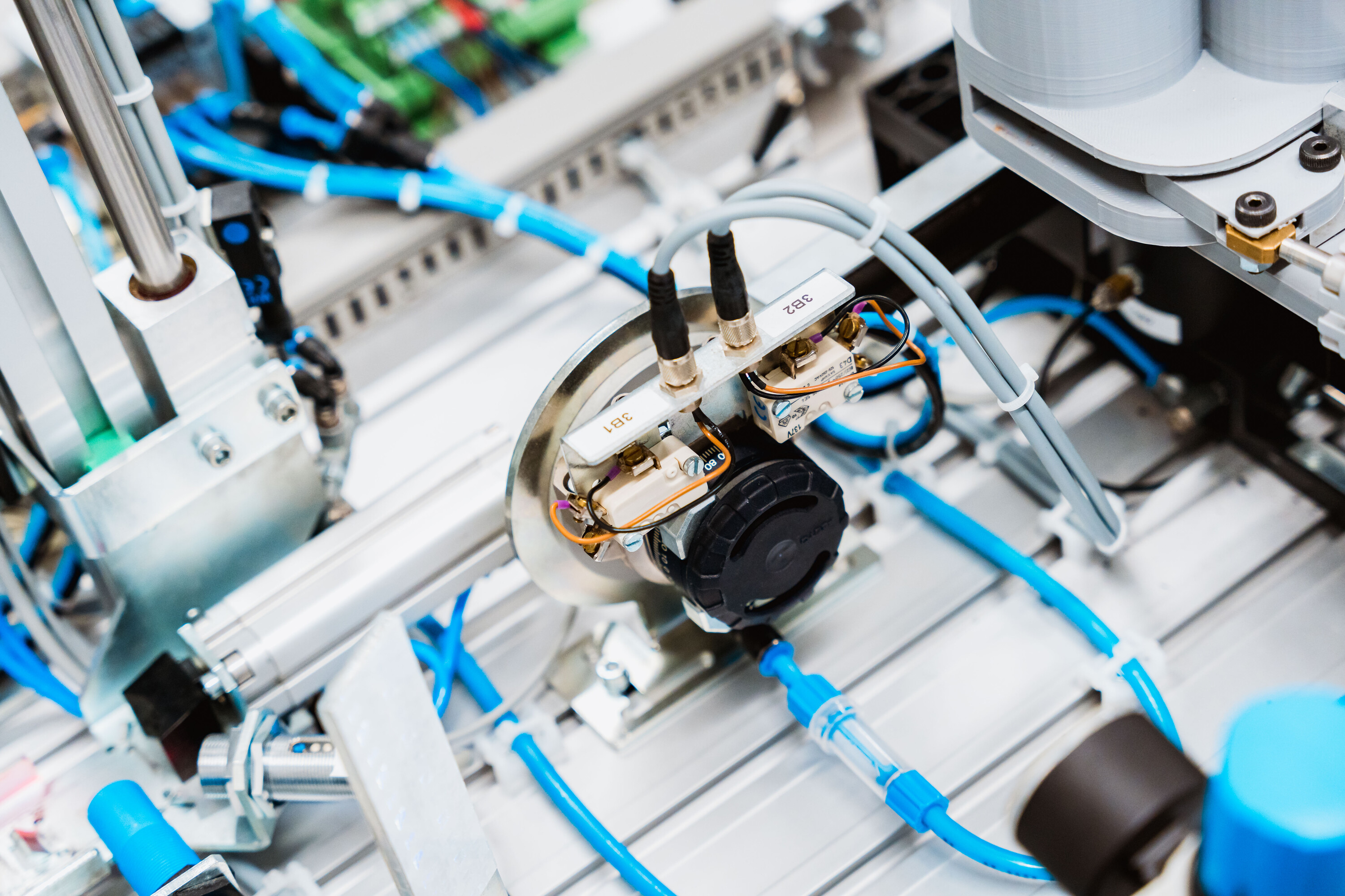
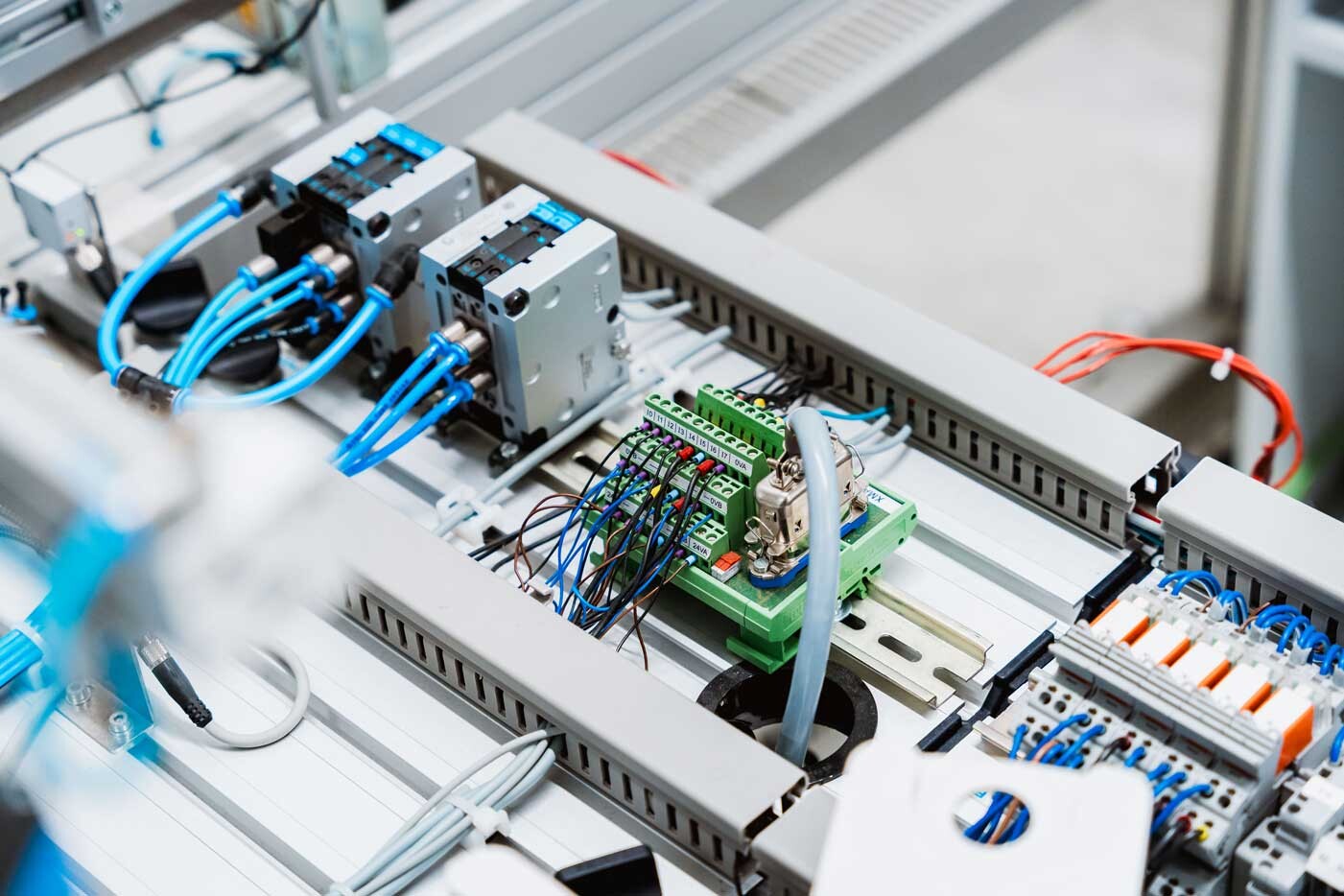
The Automation Lab has an extensive technical infrastructure. It is based on ESD workstations, soldering stations, breadboards, and components for electrical circuits, supplemented by measuring devices such as multimeters, oscilloscopes, logic analyzers, energy measurement kits, and sensor equipment. A central element is the Festo learning factory, an automated production line with electro-pneumatic modules and Siemens controllers. After simulations on the digital twin with CIROS, students can try out changes directly on the real system.
Industrial robots (Mitsubishi, Universal Robots, FANUC) and a humanoid robot (NAO from SoftBank) are also available to implement various robotics scenarios.
Ehrlenbach emphasizes the role of this diversity: “We prepare students for the ongoing digitalization of production by familiarizing them with hardware and relevant software products.”

The Festo learning factory, an automated production line.
Research focus and collaborations
The Automation Lab's research focuses on topics such as the Industrial Internet of Things (IIoT), networked manufacturing (smart factories), and the integration of augmented reality into production processes. The university works closely with companies that use the lab as a test environment, evaluate prototypes, or jointly develop innovative automation solutions.
By embedding itself in degree programs such as Industrial Engineering and Smart Products & AI-driven Development, the lab promotes interdisciplinary projects and enables students to participate in real-world industrial projects.
Benefits for students and practical relevance
The Automation Lab offers students the opportunity to immediately put theoretical knowledge into practice – from electronic circuits and control programming to the analysis of production processes. Working with real systems increases professional qualifications and reduces inhibitions when entering industrial environments.
Companies benefit from direct access to laboratory infrastructure, tailor-made research partners, and early networking with young academics – which boosts innovation and transfer.

ESD workstation with integrated soldering station.
Outlook
The Automation Lab will continue to expand its capacities in the coming years. Plans include greater integration of AI methods into automation processes, increased research collaboration with industry, and an expansion of the range of practical workshops on offer. Under the leadership of Markus Ehrlenbach, the lab will continue to consolidate its role as an important bridge between research and industry and strengthen the region's innovative power.
Links:
- Automation Lab | Laboratory