PQM Dialogue 2026: AI Agents Meet Operational Excellence
- 25.06.2026
- Event Review

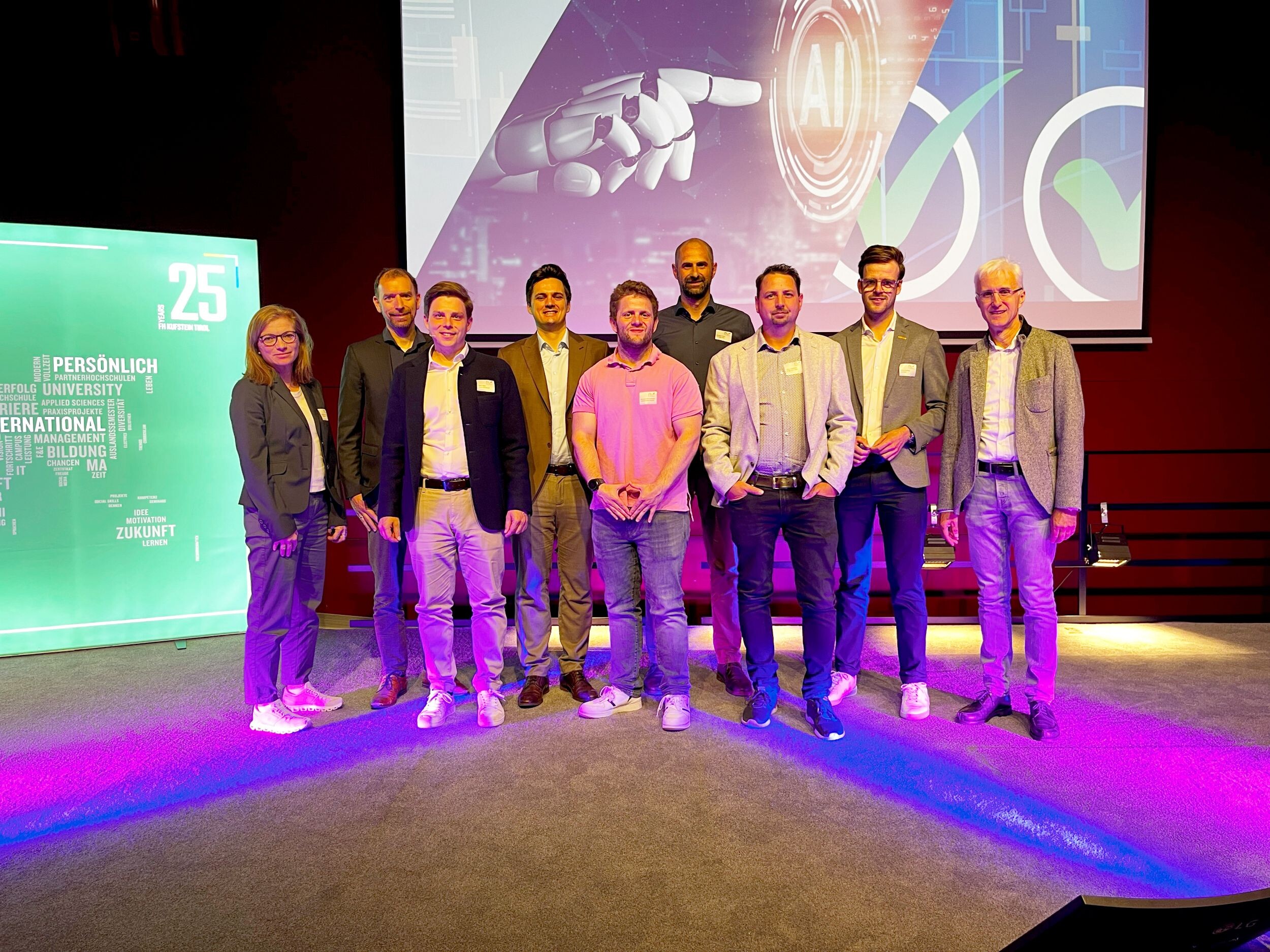
Once again, the 24th PQM Dialogue offered experts and interested attendees exciting insights into current developments, particularly in the field of artificial intelligence. The speakers provided authentic perspectives on both research and practice. Pictured from left to right: Vice Rector Prof. (FH) Dr. Claudia Van der Vorst, Asc. Prof. (FH) Ing. Markus Ehrlenbach, Mario Welte, Julian Maier, Dr. Benjamin Schwendinger, Bernhard Ebner, Daniel Buchegger, Marius Stehling, and Prof. (FH) Dr. Martin Adam.
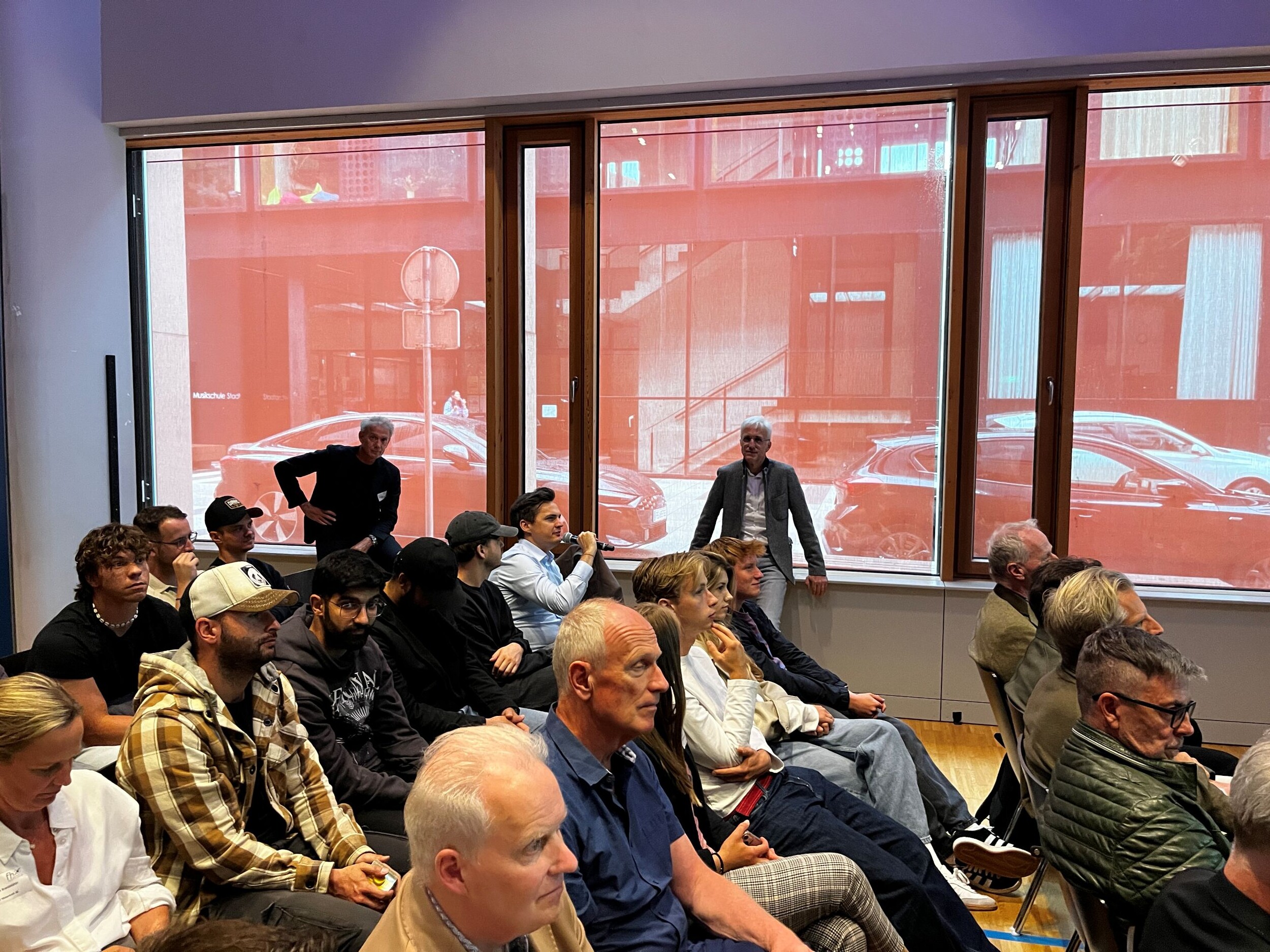
At the 24th PQM Dialogue at FH Kufstein Tirol, experts from research and industry demonstrated how AI, lean management, and leadership interact. Guests were offered a glimpse into the industrial future and into how companies can shape operational excellence in a sustainable and people-centered way.
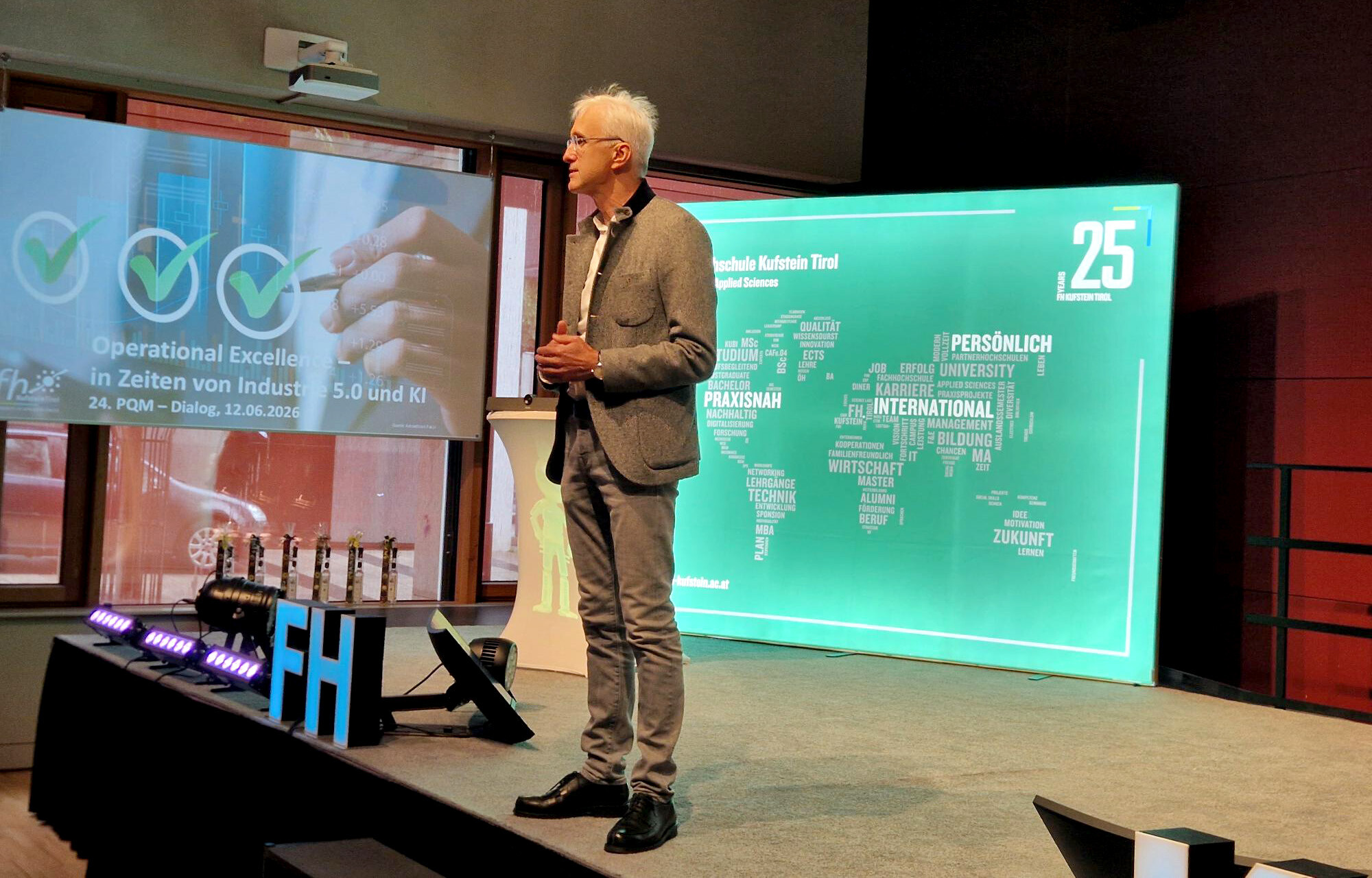
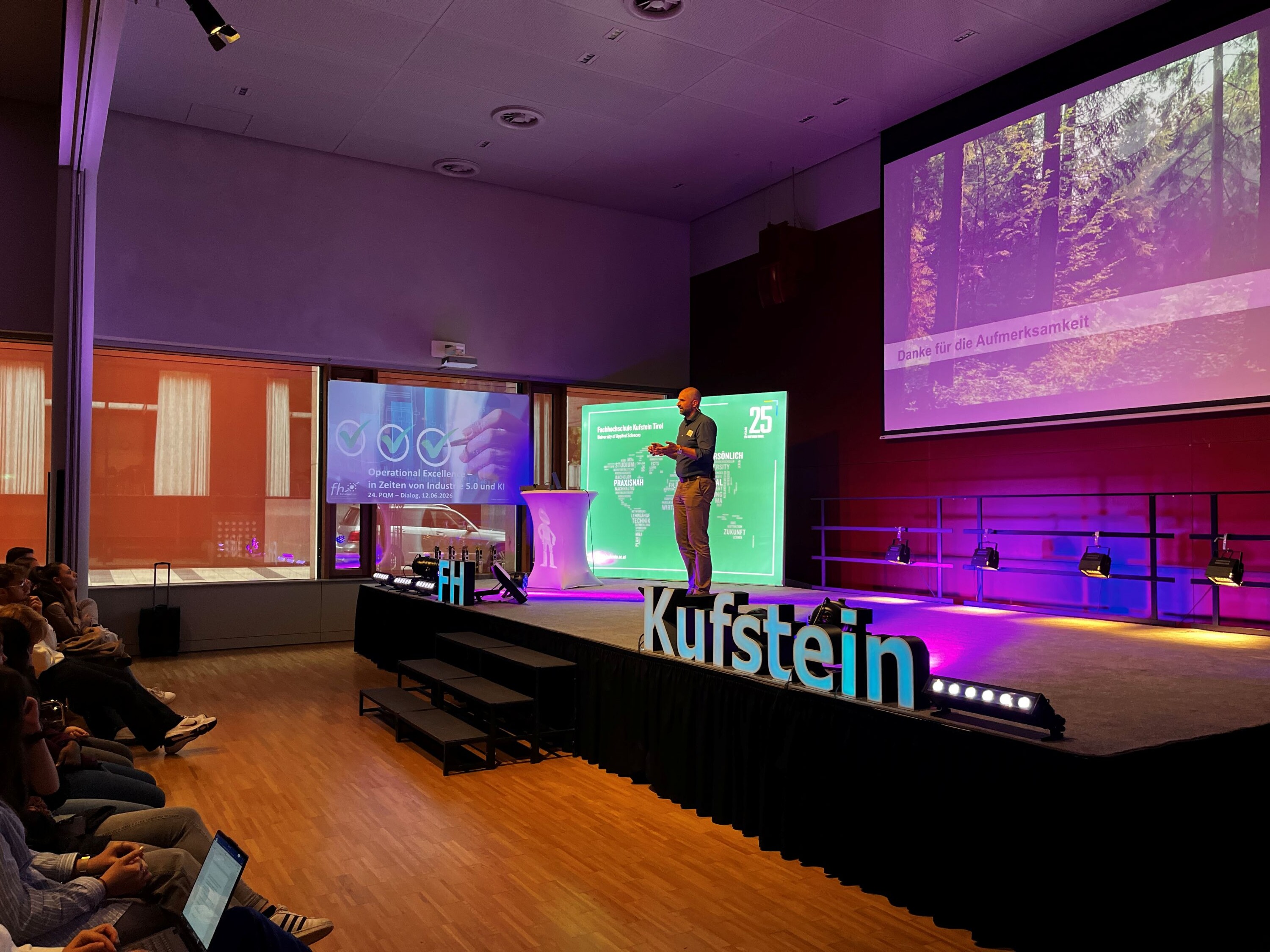
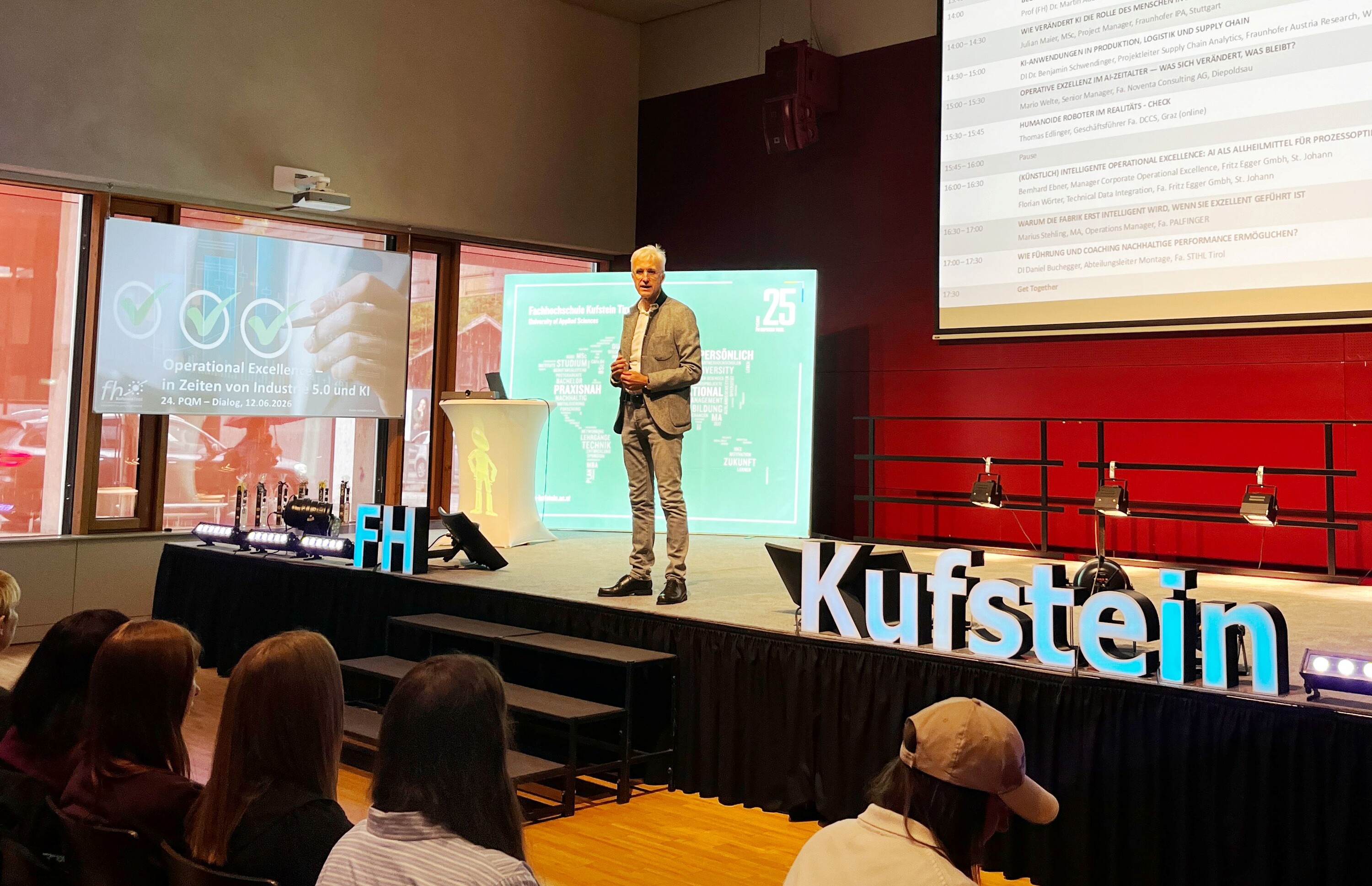
On June 12, 2026, seven speakers from research and industry explored the topic of Operational Excellence in times of Industry 5.0 and Artificial Intelligence at the PQM Dialogue held in the festival hall of FH Kufstein Tirol.
The event provided a broad overview of current developments in process and quality management. AI agents are already opening up a wide range of possible applications in production, logistics, and management. At the same time, it became clear that their successful use extends far beyond the technology itself. A reliable data foundation, clear processes, and a leadership culture that actively supports change are key prerequisites.
The presentations highlighted how closely technological development, operational application, and leadership are interconnected today.
Research: New Perspectives on AI Agents
To open the event, Julian Maier from Fraunhofer IPA in Stuttgart outlined the development from generative to agentic artificial intelligence. While generative systems respond to prompts, agentic systems act increasingly autonomously within defined boundaries. This also changes the role of humans: they set goals and guardrails, monitor implementation, and remain responsible. Maier described AI as an actor within the process, for whose use the principle of capability, willingness, and permission applies. Capability depends largely on data quality, willingness became visible in an example where a system independently declined a task, and permission is shaped by regulatory requirements such as the EU AI Act. As a result, attention shifted beyond technological progress to the broader prerequisites for responsible use.

Julian Maier pointed out that the responsible use of agentic AI depends not only on technical capability. Equally important are willingness, understood as autonomous system logic, and permission, which is defined by normative and regulatory requirements.
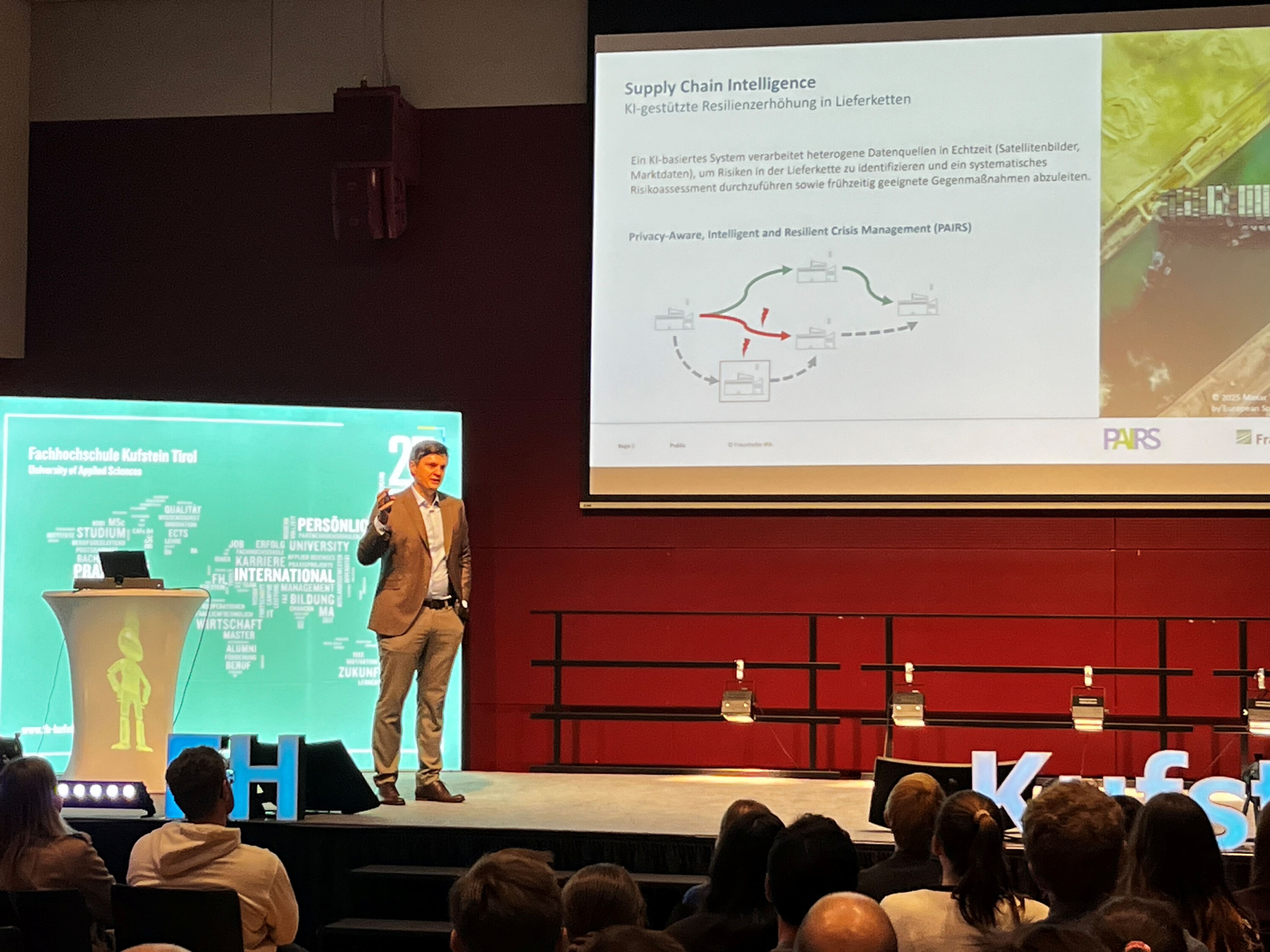
Next, Dr. Benjamin Schwendinger from Fraunhofer Austria presented two practical questions from Supply Chain Management: When will an order arrive, and when is the right time to place an order? In the first case, forecasts could be noticeably improved by including additional information such as holidays, suppliers, or product characteristics. In the second comparison, however, established methods proved to be just as effective. The presentation illustrated that the added value of AI agents always depends on the specific problem at hand.
From Process Control to Robotics
Mario Welte from Noventa Consulting in Diepoldsau translated these developments into day-to-day operations and focused on Shop Floor Management. He explained how AI models can link process data with target values, classify deviations, and derive concrete actions based on measures that have already been implemented. At the same time, he clearly positioned the role of the technology: lean management remains the foundation of stable and high-performing processes, while AI agents expand this foundation with additional analytical and control capabilities.
Before the break, Thomas Edlinger, Managing Director of DCCS in Graz, turned the focus to humanoid robotics - a field currently situated between technological progress and industrial reality. Joining online, he showed that these systems still have some way to go, particularly in highly precise gripping movements and continuous use in production. For that reason, he argued in favor of launching pilot projects now in order to gain experience and systematically develop future application potential.
Practical Examples from Industry and Leadership
After the break, industrial practice took center stage. Bernhard Ebner, Head of Operational Excellence at FRITZ EGGER in St. Johann, showed which conditions are needed for the use of AI in everyday production: a robust data foundation, standardized processes, and a leadership culture that creates trust. Using examples such as predictive maintenance, automated surface inspection, and intelligent control systems, he demonstrated how AI can help optimize machine settings so that product quality, output, and material usage are better aligned.

Bernhard Ebner illustrated that AI is particularly effective in industrial practice where reliable data, clear processes, and a supportive leadership culture come together.
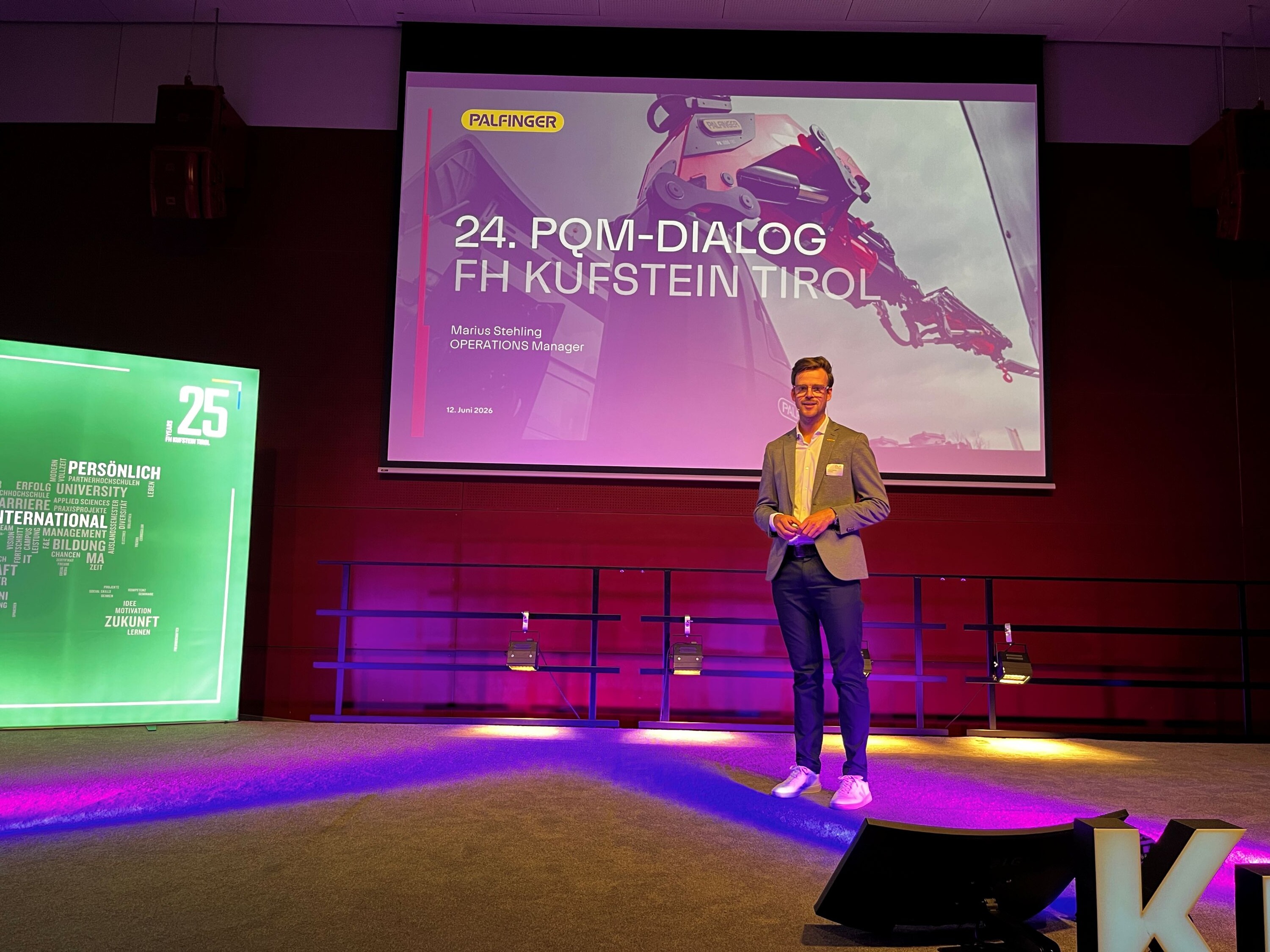
Building on this, Marius Stehling, Operations Manager at PALFINGER, placed lean management, Industry 5.0, and AI within the company’s long-term development. Lean forms the basis for Operational Excellence, on top of which a digital backbone is built that makes the use of AI possible in the first place. This interplay is held together by a leadership culture that deliberately keeps people at the center.

Marius Stehling emphasized that a people-centered leadership culture plays a decisive role in shaping the interaction between lean management, digitalization, and AI.
Finally, Daniel Buchegger from STIHL Tirol showed how the requirements of Industry 5.0 can be translated into everyday work through consistent leadership training. He made it clear that the success of operational excellence depends less on individual employees than on the structures of the system. Leaders must therefore provide orientation, clarify decision-making spaces, and create time for coaching and root cause analysis. Only then can improvements become effective in the long term.
Overall, PQM Dialogue 2026 made it clear that artificial intelligence can be a powerful lever for greater efficiency. However, its potential unfolds only where processes are well structured, data is reliable, and leadership provides clear direction. That interplay was the central message of the event.
Links:
- PQM-Dialogue | Event series
- ERP Systems & Business Process Management | pt